Finding a home in Cyprus that is reasonably priced, well maintained, and located in a convenient area is becoming more difficult each year. Rental pressure continues to build, and for many middle-class families, housing costs are no longer just another monthly expense. In practice, rent is often absorbing the equivalent of one full salary.
And housing is only part of the equation. Families still need to cover groceries, utilities, transportation, education, healthcare, travel, and everyday leisure spending.
How Salaries Are Distributed in Cyprus
According to official statistics, a large share of workers in Cyprus still earn relatively modest incomes before tax.
Around 36.5% of employees earn less than €1,500 per month.
Another 39.7% fall into the €1,500 to €2,999 range.
About 12.7% earn between €3,000 and €4,499.
Only 6% receive between €4,500 and €5,999.
Against that backdrop, rising rents are placing growing pressure on the middle of the market.
Nicosia: More Stable, but Still Expensive for Families
In the capital, the estimated monthly cost of living for a family of four stands at around €3,030, excluding rent. The average monthly salary after tax is approximately €1,542.
According to Numbeo data for April 2026, a one-bedroom apartment in central Nicosia rents for about €693 per month, while outside the center the average is closer to €593. A three-bedroom apartment costs around €1,450 in the city center and roughly €1,120 outside it.
Compared with other cities on the island, Nicosia remains relatively restrained, but rent is still a major burden for households managing an average income.
Limassol: The Most Challenging Rental Market on the Island
Limassol remains the most expensive city in Cyprus when it comes to renting. A family of four needs an estimated €3,329.4 per month to maintain a decent standard of living, not including rent. The average salary after tax is around €2,370.
Rental prices in Limassol are significantly higher than in Nicosia. A one-bedroom apartment in the city center averages €1,340 per month, while outside the center it costs around €1,157. A three-bedroom home reaches roughly €2,350 in central areas and about €1,760 beyond them.
For many households, rent in Limassol is no longer just a high expense. It competes directly with essential day-to-day living costs.
Larnaca: Less Expensive on Paper, but Still Far from Affordable
In Larnaca, the estimated monthly cost of living for a family of four is around €2,805, excluding rent. The average monthly salary after tax is approximately €1,650.
A one-bedroom apartment in the city center rents for about €800, while outside the center the average falls to €620. A three-bedroom apartment costs around €1,475 in central areas and €1,105 outside the city center.
Larnaca is often seen as a more affordable option, but the actual gap is not wide enough to make it genuinely easy for middle-income families.
Paphos: The West of the Island Is No Longer a Budget Alternative
In Paphos, a family of four needs around €2,937 per month for basic living costs, excluding rent. The average salary after tax stands at approximately €1,659.
Rent for a one-bedroom apartment in the city center averages €1,000, while outside the center it is around €883. A three-bedroom apartment costs roughly €1,833 in central locations and €1,566 outside them.
In other words, western Cyprus is no longer the affordable fallback it may once have seemed. Paphos is now firmly part of the island’s more expensive rental landscape.
Rental Prices Are Still Climbing
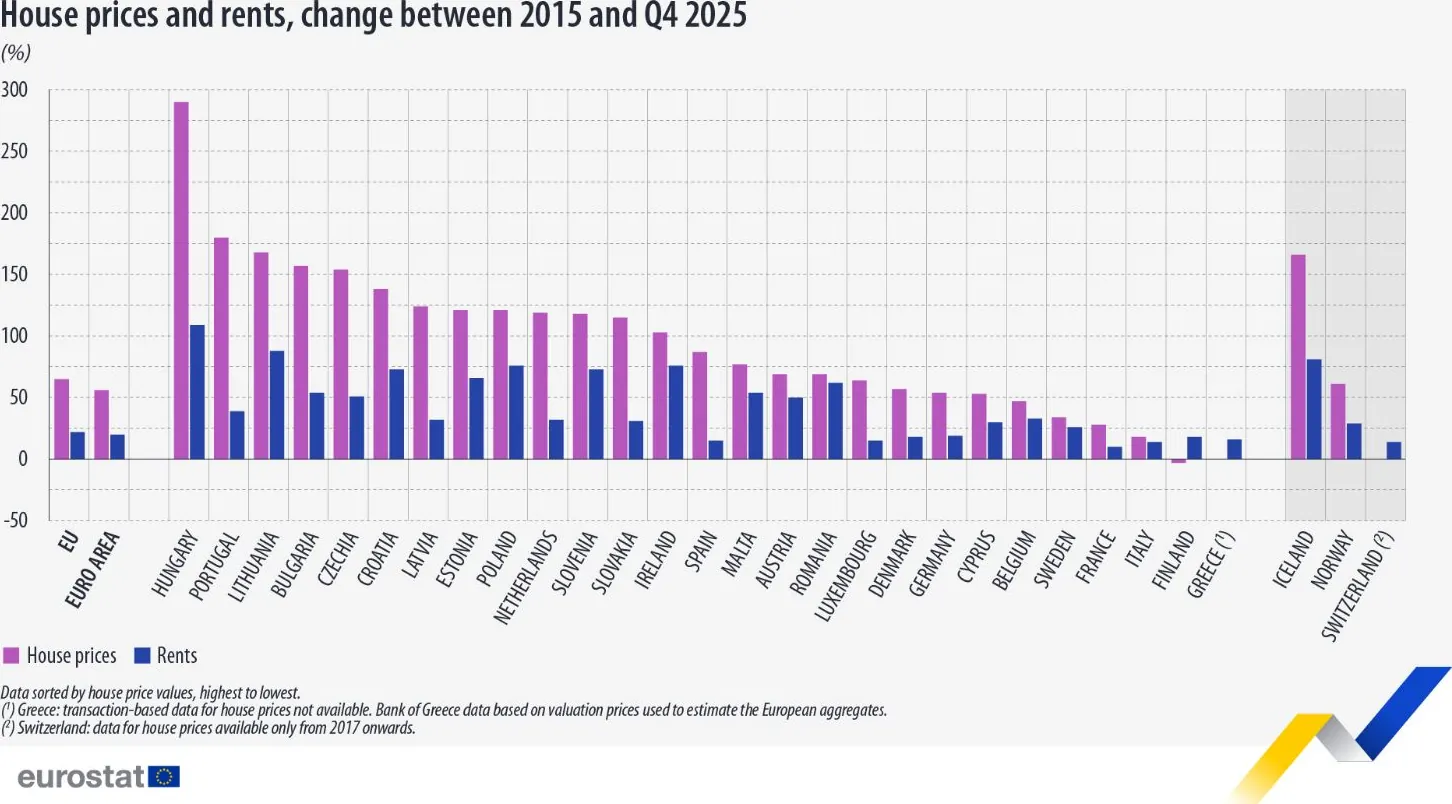
There is little indication that this pressure is temporary. According to Eurostat, rental prices in Cyprus rose by 4.27 percentage points in 2025 compared with 2024, using 2015 as the base year.
That points to a market that continues to move upward while household budgets remain under strain.
Why Employment Is Rising Across Cyprus
The shift is visible not only in real estate, but also in how families structure their lives. In the past, one income could more realistically support a household while the second adult stayed focused on childcare and domestic responsibilities. Today, that model is becoming far harder to sustain.
For many families, one salary is no longer enough to maintain a comfortable standard of living. That is one of the key reasons more women are entering the workforce and dual-income households are becoming the norm.
The statistics reflect that change clearly. In 2015, the employment rate for people aged 20 to 64 in Cyprus stood at 67.9%. By 2025, it had risen to 81.3%.
Conclusion
Cyprus remains an attractive place to live, but the cost of renting is reshaping the financial reality of everyday life. In the island’s main cities, housing is no longer simply a matter of comfort or neighborhood preference. For middle-class families, it has become one of the most intense sources of economic pressure.
And as rents continue to rise faster than many household incomes, housing is taking up an ever-larger share of the monthly budget, in some cases the equivalent of an entire salary.