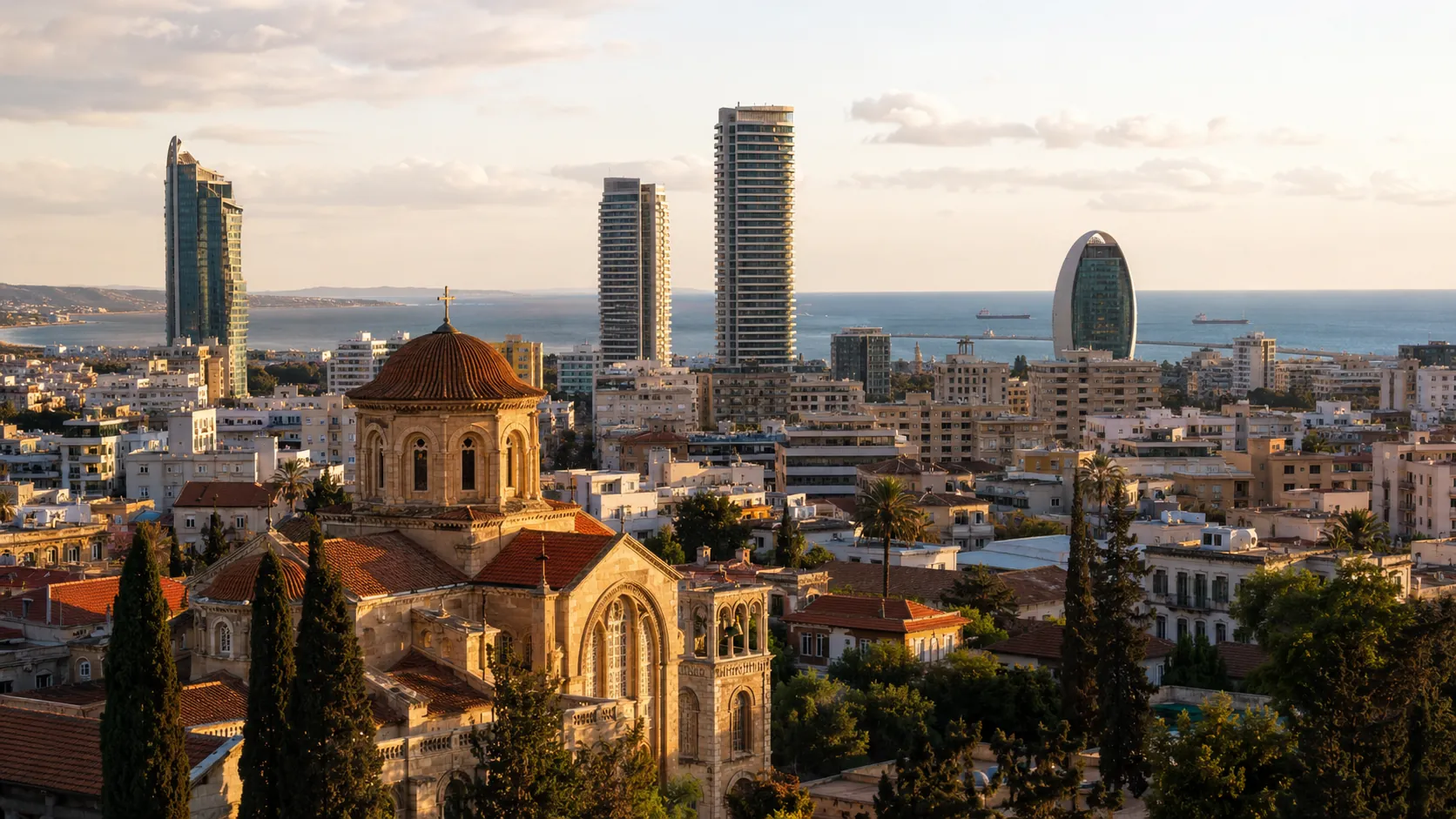
Limassol is not only towers, business centres and expensive sea views
Limassol is easy to misunderstand.
From the outside, it often looks like a city of glass towers, luxury apartments, marinas, business lounges and fast decisions. A place where the coastline is measured in square metres, sea views and investment potential.
But that is only one speed of Limassol.
There is another one.
It is quieter. Slower. More human. It lives in old neighbourhoods, courtyards, public squares, theatres, residential districts and forgotten buildings. It lives in the places where people are not posing in front of the city — they are simply living inside it.
This is the side of Limassol that the Lemesos 2030 vision tried to bring forward: not a glossy city reduced to real estate headlines, but a place of people, memory, neighbourhoods, cultural spaces and unfinished stories.
This article is not a classic guide to attractions. It is a route through Limassol that helps you see the city differently: not from above, from the height of towers, but from street level — from a promenade, a theatre square, an old cinema, a residential neighbourhood and a quiet garden.
We have brought these places together on the Anisad interactive map, so you can not only read about them, but walk through them in real life — from the sea to the old streets, from public spaces to the hidden layers of the city.
Open the route on the interactive map
A city of two speeds
Limassol is often described as the most dynamic city in Cyprus. And that is true.
It is building fast, growing fast, becoming more expensive fast. New towers, international companies, modern residential projects, premium restaurants, coworking spaces and business districts are constantly changing its skyline.
But next to this visible speed, another Limassol continues to exist.
A city where families have lived in the same neighbourhoods for decades. Where refugee housing estates still carry the memory of the 1970s. Where older people meet every morning on the same bench. Where a small bakery can tell you more about a district than a new tower by the sea.
This is the real tension of Limassol: it is both a city of the future and a city of memory.
At the centre of the Lemesos 2030 concept was the idea of The Understory. In a forest, the understory is the layer of life beneath the tall trees. It is not always visible at first, but it supports the whole ecosystem.
In Limassol, this “understory” is made of people, communities, neighbourhoods and stories that usually remain outside the city’s main narrative.
That is why this route does not begin with a skyscraper. It does not begin with a luxury restaurant.
It begins with a place where the city belongs to everyone.
1. Molos: where Limassol becomes public
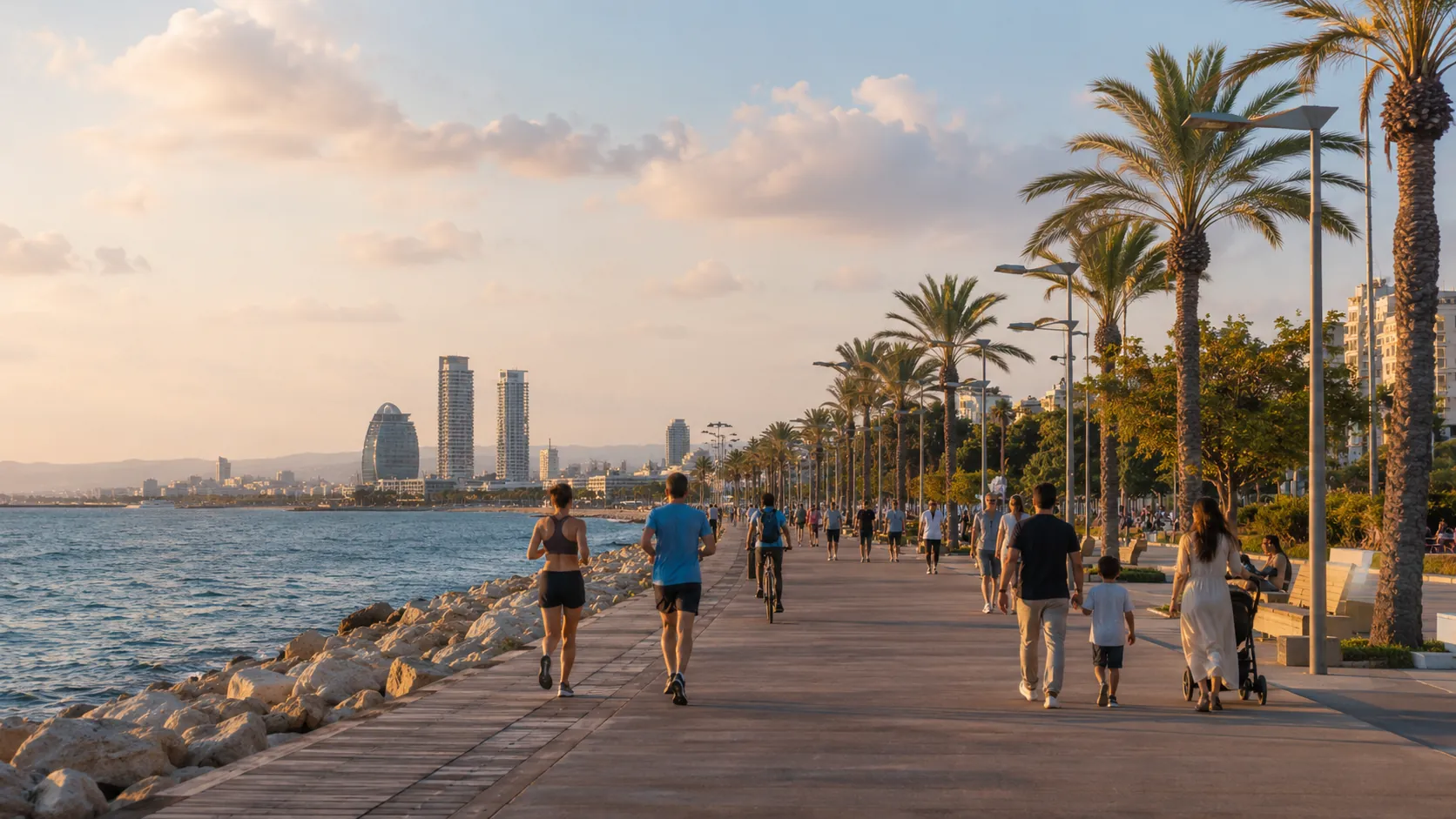
Molos is one of the simplest and most important places in Limassol.
It is not hidden. It is not a secret corner known only to locals. Quite the opposite: everyone knows it. And that is exactly why it matters.
Families walk here with children. Runners pass by the sea. Teenagers gather after school. Elderly couples sit on benches. Tourists take photos. Cyclists move along the promenade. Someone drinks coffee by the water. Someone simply comes to look at the sea.
Molos does not ask for status. It does not ask for money. It does not ask why you are there.
It is open.
And that is its strength.
In a city increasingly associated with prices, square metres and investment, Molos reminds us that Limassol is first of all a place for people. For a slow evening by the sea. For a conversation without a purpose. For a walk after work. For children’s laughter, waves, wind and ordinary urban life.
Here, more than anywhere else, you feel that Limassol should not only be a showcase. It can also be soft, accessible and alive.
2. The Old Port and Limassol Marina: past and future on the same coastline
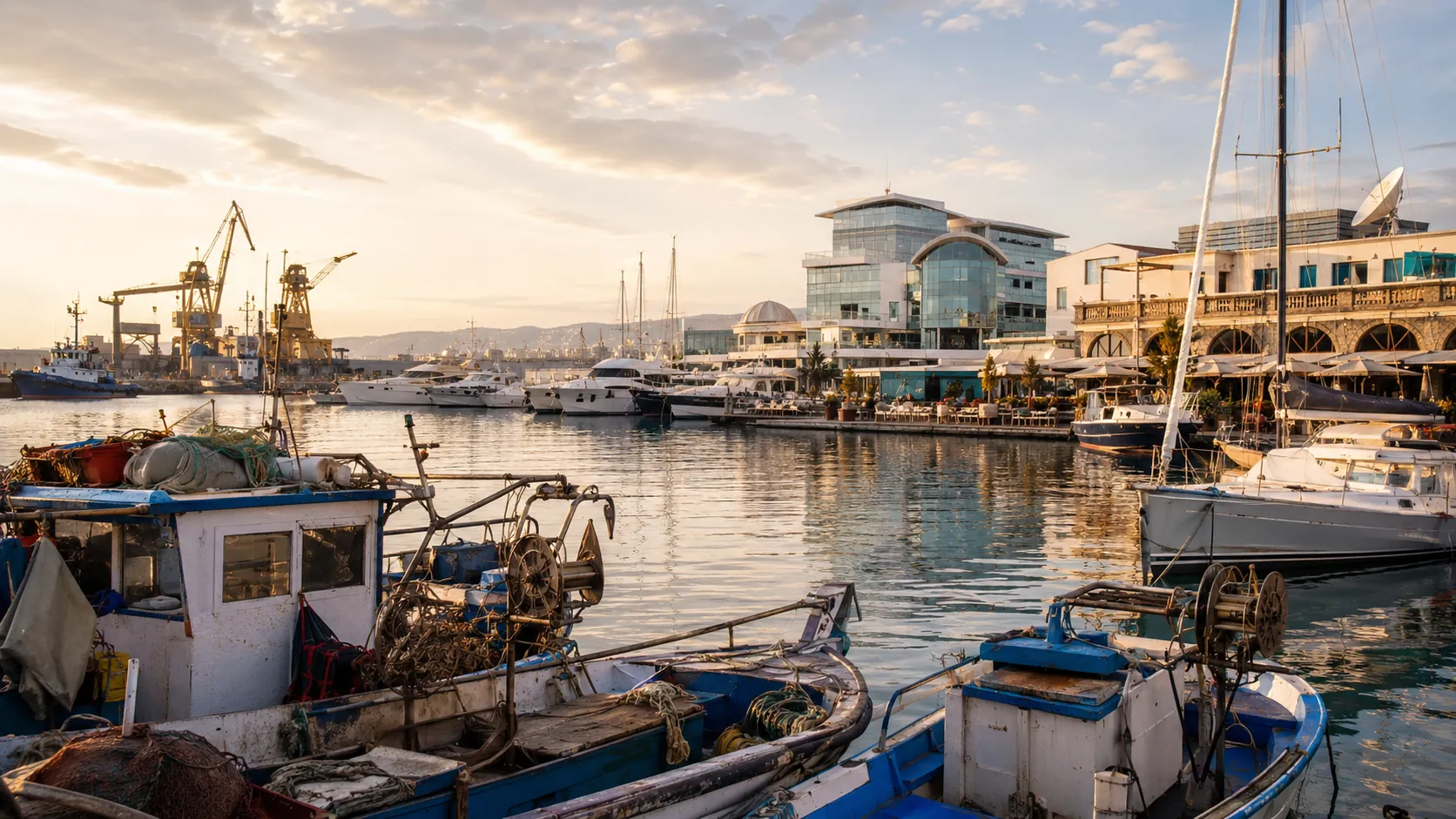
If you continue from Molos along the water, the city begins to change.
The Old Port and the Marina stand close to each other, but they speak different languages.
The Old Port keeps the maritime memory of Limassol: boats, trade, labour, fishermen, port life and the older rhythm of a city shaped by the sea. The Marina belongs to another moment: new capital, yachts, restaurants, expensive property and the modern image of coastal living.
It would be too easy to say that the old is good and the new is bad.
The Marina is also part of today’s Limassol. It gave the city a new image, attracted attention and changed the coastline. But standing next to the Old Port, it also raises a sharper question: how can a city grow without erasing its own memory?
This is what makes Limassol interesting. These two layers are not far apart. They are side by side. The old and the new look at each other across the same waterfront.
Here, the city seems to ask itself what it wants to become next: only an expensive coastal centre, or a place that still knows how to protect its depth?
3. Heroes Square and Rialto Theatre: Limassol without the gloss
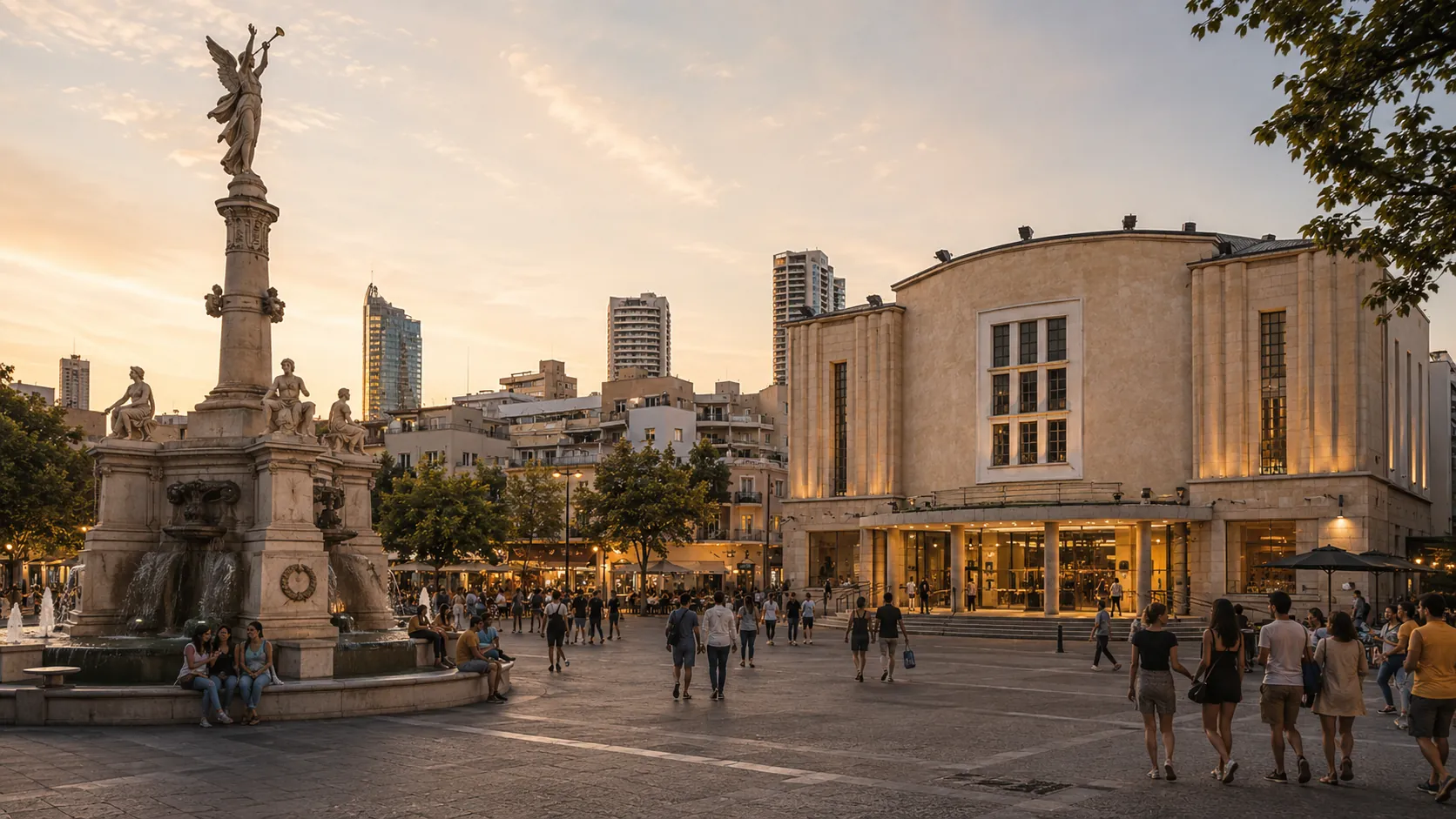
Heroes Square is not the most polished place in Limassol. And that is exactly why it is important.
Here, the city becomes less resort-like and more real. Old streets, evening conversations, bars, theatre, passers-by, people of different ages and social circles — everything mixes in one space.
Nearby stands the Rialto Theatre, one of the cultural symbols of Limassol. But the value of this place is not only in the programme or the building. It is in the square itself, which has always been a meeting point for different versions of the city.
This is Limassol without the perfect postcard feeling.
It is a little noisy. A little chaotic. Sometimes contradictory. But alive.
If Molos shows Limassol as an open space by the sea, Heroes Square shows it as a city of character. Here, the polished image disappears, and something deeper appears: people, stages, conflicts, memory, nightlife, culture and the raw material of urban life.
This Limassol is harder to sell.
But it is much more interesting to understand.
4. Kapsalos: the neighbourhood that does not appear in brochures
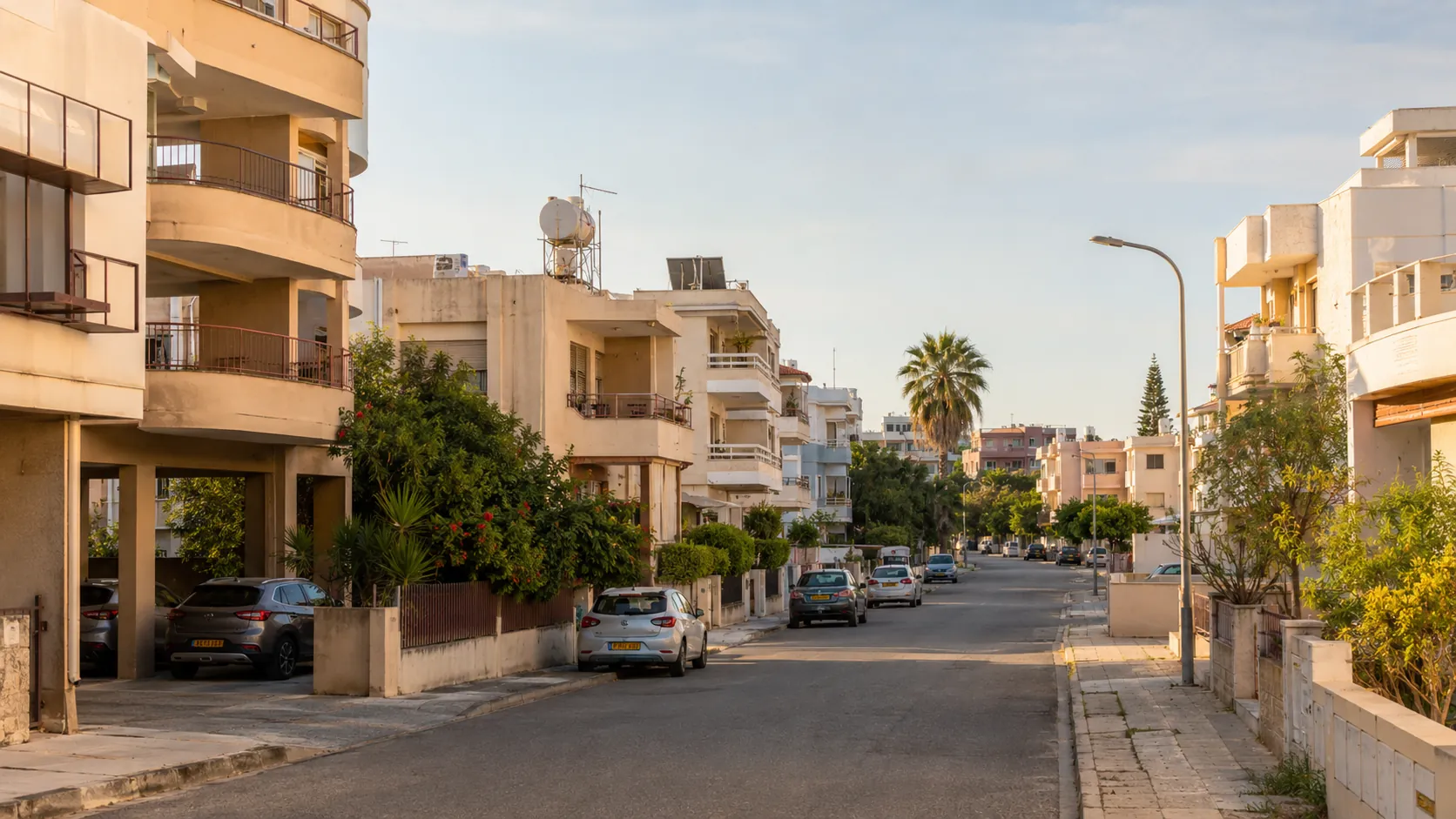
Kapsalos is another Limassol.
Not the one usually shown in “best views”, “premium areas” or “investment opportunities”. This is a residential neighbourhood with its own history, courtyards, routines and memory.
It is connected with displacement, family stories, everyday life and urban layers that are not always visible to those who look at Limassol only through the seafront.
There is no obvious tourist drama here. No easy “wow effect”. But there is something else: the feeling of a real city that does not exist for the viewer.
That is why Kapsalos matters.
It reminds us that Limassol is not only new residences and high-rise buildings. It is also the districts where people have built their lives for decades, where children grew up in courtyards, where neighbours know each other, where the history of the city is kept not in museums, but in ordinary homes.
Lemesos 2030 paid attention to places like this not to make them fashionable, but to return them a voice.
And perhaps that is one of the most honest ideas of the whole route: you cannot understand a city if you only look where it is beautiful.
5. Petrou & Pavlou / NAAFI: the domestic side of Limassol
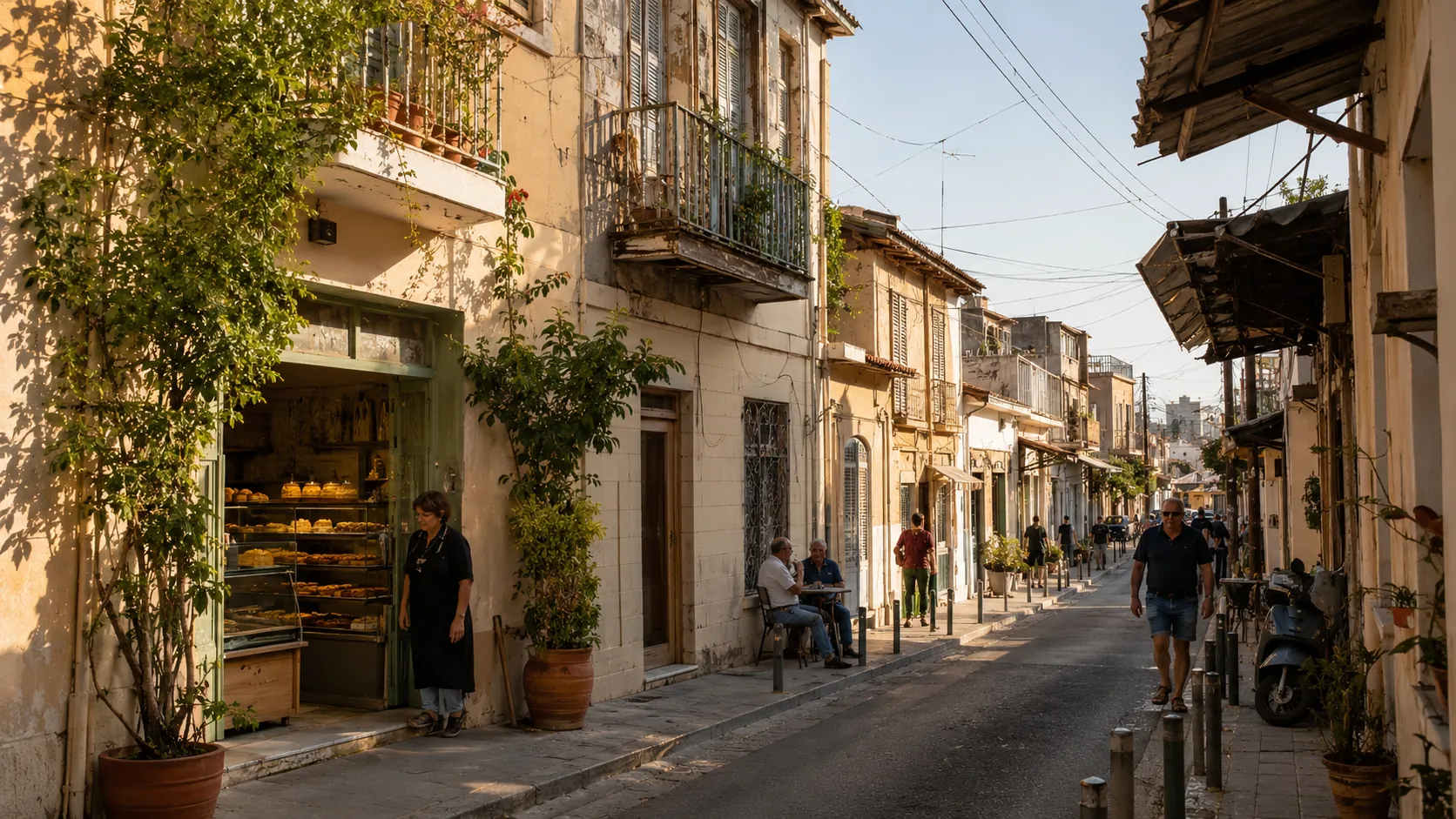
Some neighbourhoods do not reveal themselves immediately.
Petrou & Pavlou and the NAAFI area are exactly like that. They do not try to impress you at first glance. But if you walk more slowly, the details begin to appear: older houses, local streets, small shops, bakeries, school routes and traces of different historical periods.
This is not the ceremonial Limassol.
This is the domestic Limassol.
In the logic of Lemesos 2030, areas like this matter as spaces of memory. Culture here does not live only in galleries and theatres. It lives in food, family stories, neighbourhood conversations, familiar routes, recipes and small rituals.
Sometimes a city is best understood not through architecture, but through the smell of fresh bread in the morning.
Petrou & Pavlou shows Limassol from this side: not as an investment centre, but as a place where people know their streets, their shops and their habits. Where the past is passed on not through grand monuments, but through daily life.
This is an essential layer of the city.
Because neighbourhoods like this make Limassol not just a growing market, but a living organism.
6. Former Apollon / Taksim Cinema: a place waiting for memory
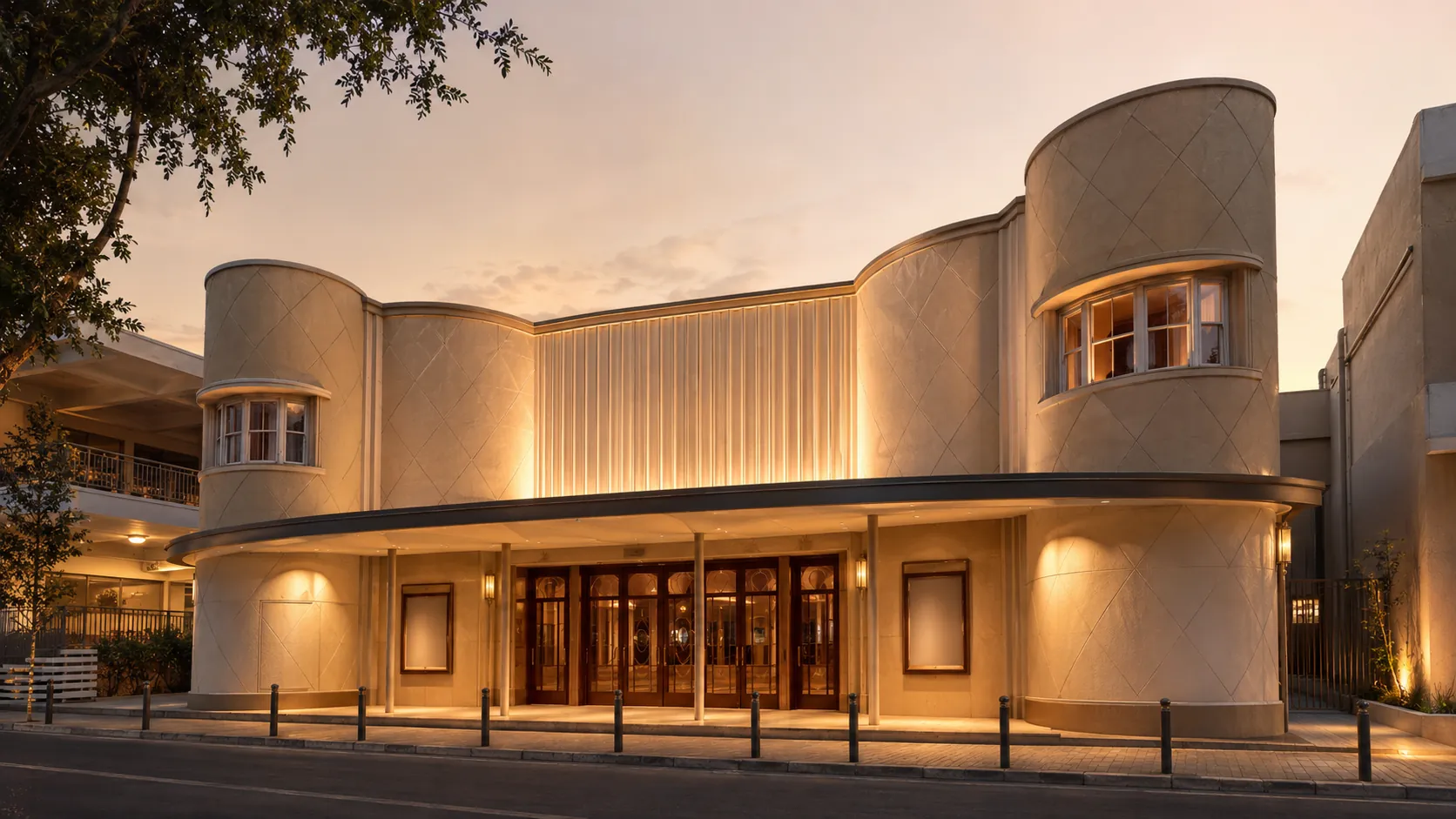
Every city has buildings that seem to be trapped between the past and the future.
The former Apollon Cinema, previously known as Taksim, is one of them.
Once, the cinema was a point of attraction. People came here not only to watch films — they came to be together. Before streaming platforms, smartphones and endless individual content, cinema was a collective experience. One hall. One screen. One darkness. One shared emotion.
Today, the place is perceived differently.
It no longer shines. It no longer invites people in with posters. It no longer gathers queues. But in this state, it becomes an important symbol. Apollon shows that urban culture is not only what is being built now, but also what the city did not manage to preserve.
Limassol knows how to create new things. The harder question is whether it knows how to care for the old before it disappears completely.
This place should not be romanticised. Abandonment is not beautiful by itself. But buildings like this help us see the city more honestly. They remind us that behind fast development there are always pauses, losses and unfinished stories.
Apollon is not just a former cinema.
It is a question to the city: what do we consider worthy of the future?
7. Municipal Gallery and Polydoridis Garden: the quiet cultural side of the city
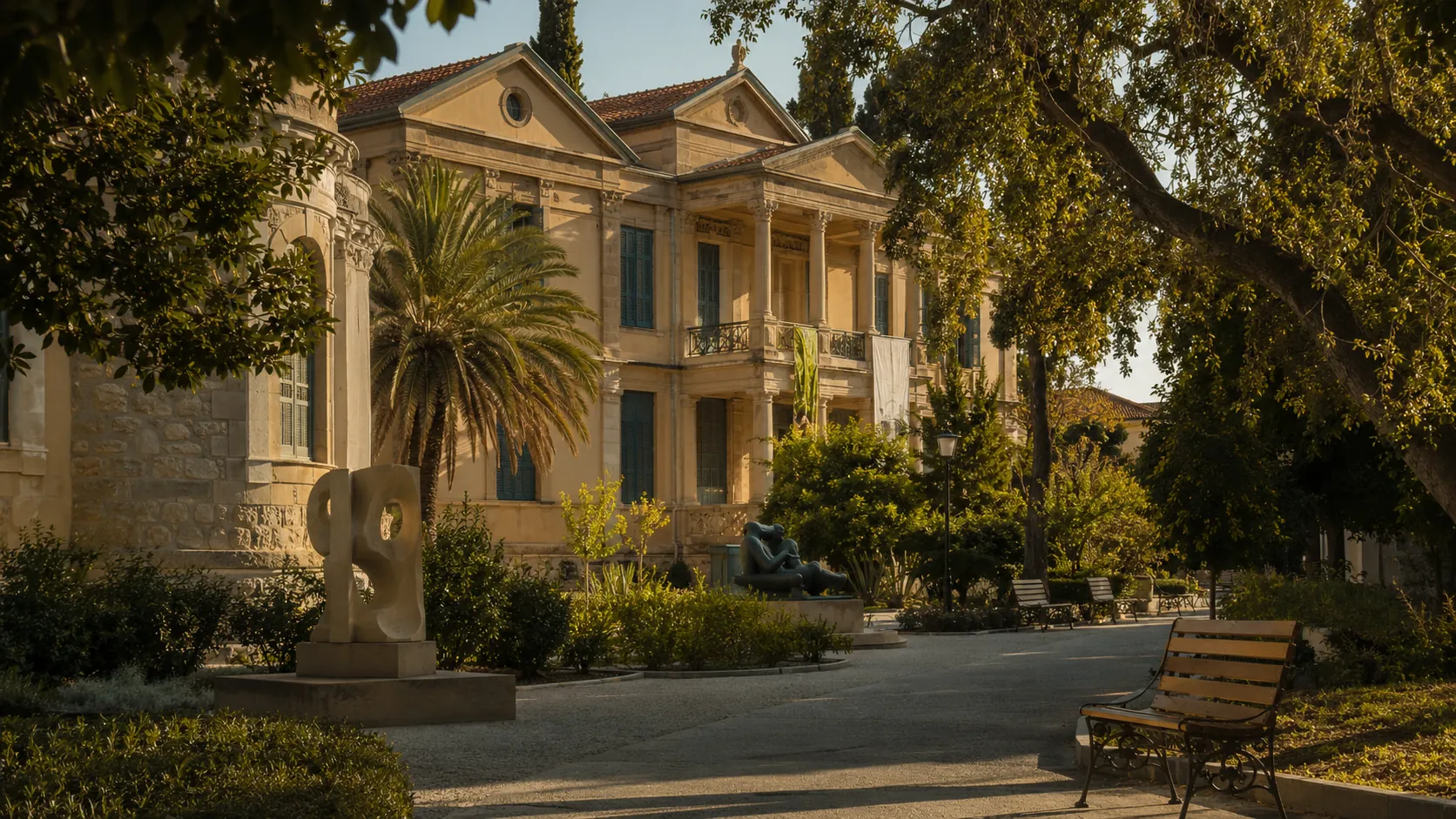
After the old streets, dense neighbourhoods and abandoned cinema, Limassol needs air.
The Municipal Gallery and Polydoridis Garden give exactly that feeling.
This is not the loudest stop on the route. But it matters because of its mood. Here, Limassol becomes softer: trees, shade, art, calm, people who are not rushing.
The gallery reminds us that the city’s culture is not only about large festivals and international ambitions. It is also about local artists, small exhibitions and intimate spaces that shape the taste and memory of a place.
The garden adds another tone. It brings the city back to human scale. In Limassol, where people increasingly speak about the height of buildings, places like this become especially valuable. They do not compete with towers. They simply give people a place to pause.
And perhaps this is also part of the soul of the city.
Not everything has to be large, expensive and impressive. Sometimes a city only needs shade, a bench, greenery, art and a few minutes of silence.
Why this route matters
This route is not trying to prove that one Limassol is right and another is wrong.
A city does not have to choose between the past and the future. Between towers and old neighbourhoods. Between the Marina and Kapsalos. Between business and culture. Between investment and memory.
But it must remember that all of these things exist at the same time.
Limassol is interesting not because it has become expensive. And not because it is building quickly. It is interesting because beneath this rapid development there is still a complex, layered and living city.
A city of two speeds.
One speed is visible. It moves along the seafront, through development projects, new restaurants, glass facades and international offices.
The other is quiet. It lives in old courtyards, theatre squares, refugee neighbourhoods, forgotten buildings, local gardens and the people who make Limassol what it is.
If you look only at the first speed, you can see a successful city.
But if you see the second, you can feel its soul.
Walk through Limassol differently
Open the route on the Anisad interactive map and follow these places not as a checklist of attractions, but as a conversation with the city.
Begin by the sea. Walk through the port and the old centre. Look toward neighbourhoods that rarely appear in travel selections. Stop by the former cinema. End the route in greenery and silence.
Limassol does not reveal itself in one glance.
But if you walk more slowly, it stops being only a city of towers — and becomes a city of people, memory, contrasts and living stories.
Open the interactive route map