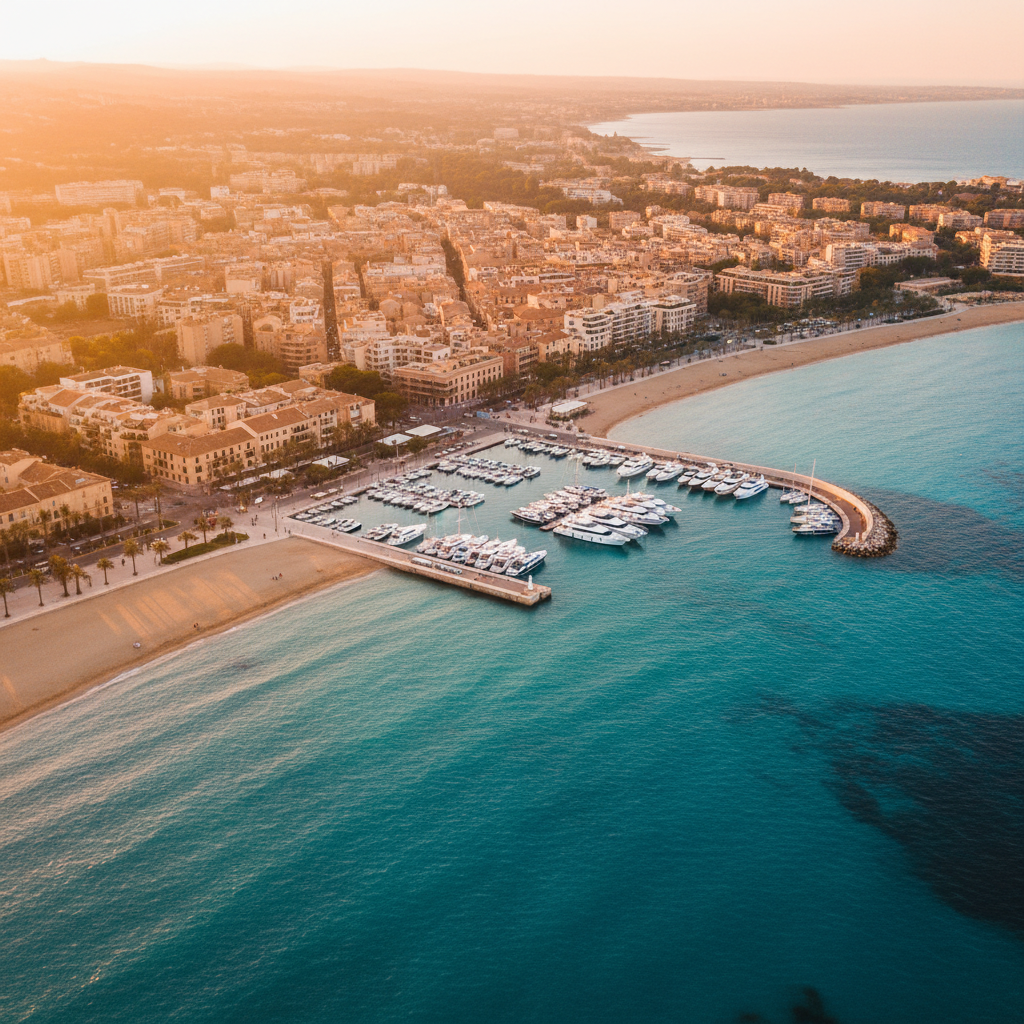
A €1.2 billion infrastructure project is approaching its defining moment — and the property market isn't waiting. Larnaca, long overshadowed by Limassol's luxury towers and Paphos's resort economy, quietly posted the strongest transaction growth of any Cyprus coastal district in 2025. At €1,330 per square meter, it remains the most affordable major coastline on the island. That combination — momentum plus value — rarely lasts.
The Marina Catalyst
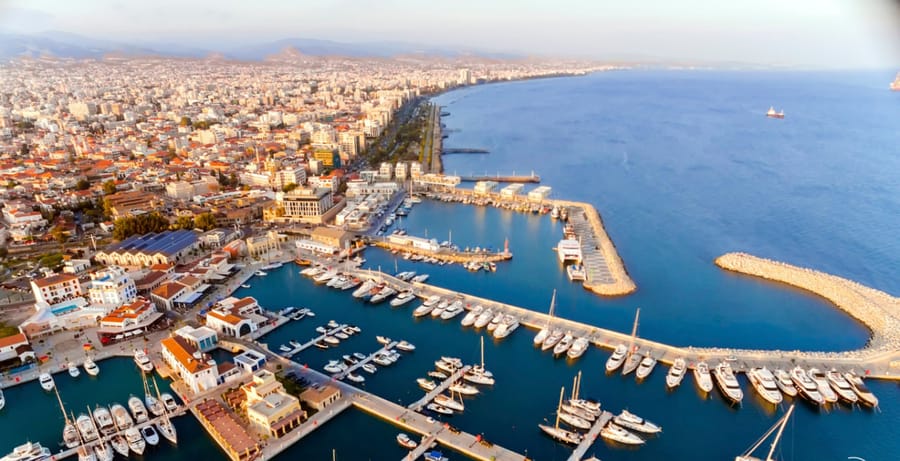
The Larnaca port and marina redevelopment has been one of Cyprus's most ambitious — and troubled — infrastructure projects. Originally conceived as a unified €1.2 billion development awarded to Kition Ocean Holdings (a Cypriot-Israeli consortium), the plan included 650 yacht berths for vessels up to 150 meters, hotels, luxury apartments, offices, retail, a yacht club, and university facilities. The government estimated it would create approximately 4,000 jobs and generate €12–19.6 billion in revenue over the project's lifetime.
Then reality intervened. The contract with Kition Ocean Holdings was terminated in March 2024 over a financial guarantee dispute — the state required €8 million while the investor offered €4.2 million. This marked the third contract termination in two decades of attempts to develop the site.
The current approach is fundamentally different. Transport Minister Alexis Vafeades confirmed that the port and marina will be developed as separate projects — a strategic shift advocated by the Hellenic Republic Asset Development Fund (HRDAF), which has managed the facilities since January 2025. Dutch infrastructure experts contributed to a study completed in early 2026, with the financial component due by mid-April 2026. The separation allows each facility to be financially sustainable independently and enables faster timelines.
Larnaca by the Numbers
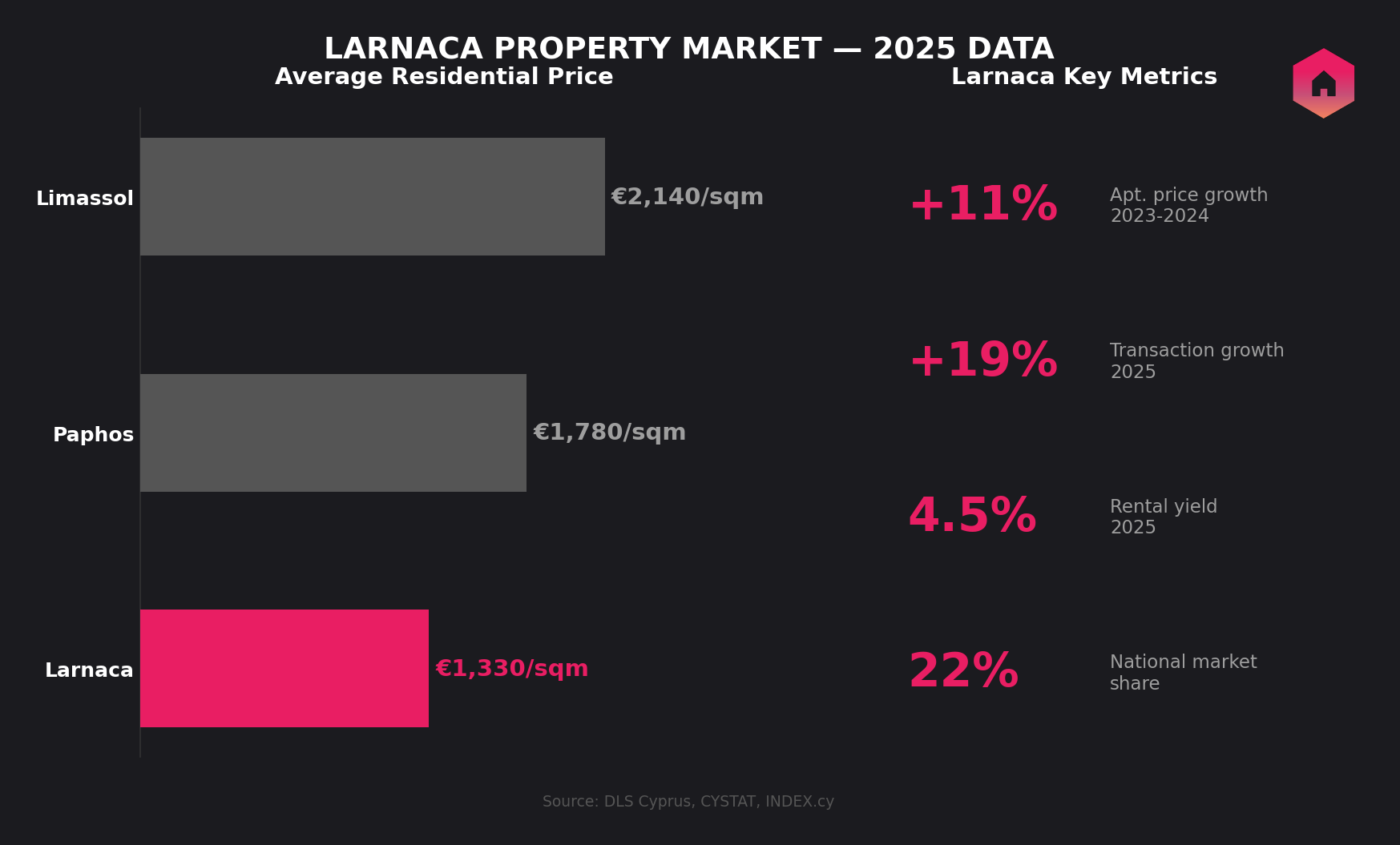
The numbers tell a story of a market in transition. Larnaca's average residential property price stands at approximately €1,330 per square meter, according to Department of Lands and Surveys data compiled by INDEX.cy. This makes it the most affordable among Cyprus's main coastal districts — Paphos averages €1,780 per square meter, while Limassol commands €2,140.
But affordability hasn't meant stagnation. Apartment prices in Larnaca grew 11% during the 2023–2024 period, outperforming the national average. Overall residential prices climbed 8.4%. The district recorded 3,978 property transactions in 2025 — a 19% increase year-over-year — capturing 22% of the national market. December 2025 saw a particularly strong 44% monthly surge in activity.
These are not the numbers of a sleepy backwater. They're the numbers of a market that's being discovered.
The Price Gap Is the Opportunity
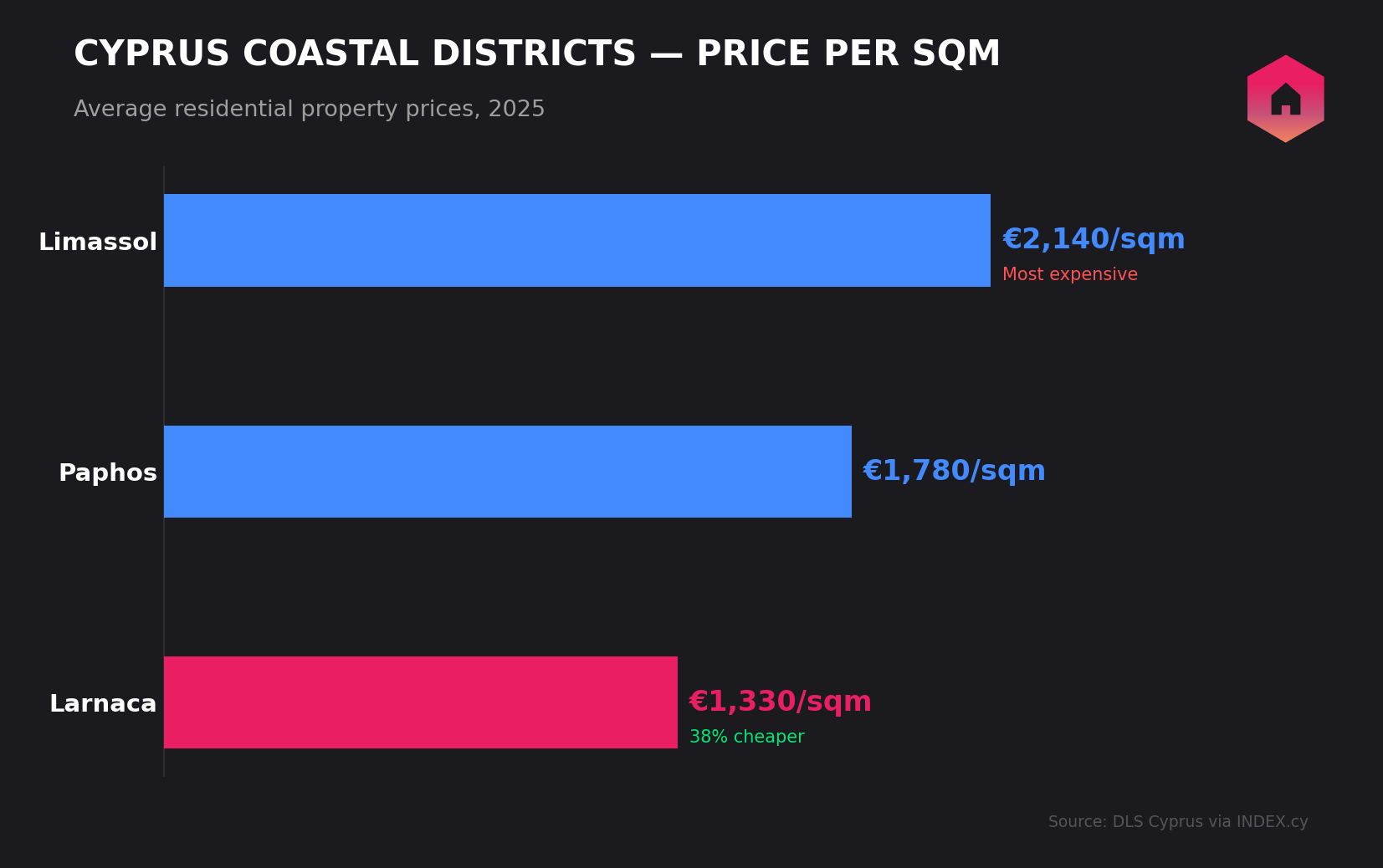
Larnaca trades at a 38% discount to Limassol and a 25% discount to Paphos. For a buyer with a €300,000 budget, this translates directly into more physical space — a larger apartment or a smaller villa rather than a studio in Limassol's tower district.
Rental yields support the investment case at approximately 4.5% annually, backed by a diverse tenant base of professionals, expats, and students. Unlike Paphos, which depends heavily on British retirees, or Limassol, which leans on corporate relocations, Larnaca's rental demand draws from multiple sources — including proximity to the international airport and the upcoming marina development zone.
Supply Signals: The Permit Surge
The construction pipeline confirms developer confidence. During January through November 2025, building permits across Cyprus increased 13.9% compared to the same period in 2024, according to CYSTAT. More telling: dwelling units authorized surged 36.1% to 14,401 units, and the total permit value rose 31.8% to €3.6 billion. Developers are building for anticipated demand, not just current absorption.
Larnaca is capturing a growing share of this activity, particularly in the Drosia, Sotiros, and areas adjacent to the future marina development. New-build apartment prices in these zones already command €2,300–€2,800 per square meter — roughly double the district average — signaling where the market expects prices to converge.
The Limassol Precedent
The closest comparable case is Limassol's own marina development, completed in 2014. The waterfront district saw property values increase by 40–60% over the following five years as international buyers, yacht owners, and luxury developers transformed the area. Limassol went from being a secondary market to Cyprus's most expensive district.
Larnaca is not Limassol — the luxury segment is smaller, the international profile is different, and the project itself has a troubled history. But the infrastructure-driven repricing mechanism is the same: major marina developments attract high-net-worth individuals, hospitality investment, and commercial activity that permanently shift the district's economic profile.
Who Benefits and Who Should Worry
The clearest beneficiaries are current property owners in the marina zone and adjacent neighborhoods, local developers who hold land banks in Larnaca, and buy-and-hold investors who can capture both rental income and capital appreciation during the construction period.
The risk side is equally clear. Buyers counting on a quick timeline face execution risk — three contracts have collapsed in twenty years, and the new development plan is still in the study phase. Local renters will face upward pressure on rents as investor demand grows. Late entrants who wait for construction confirmation will pay significantly more.
What Happens Next
The mid-2026 master plan decision is the critical milestone. If the government secures a credible investor and breaks ground within 18 months, the "hidden gem" narrative ends and institutional capital enters. If the project stalls again — and the history gives reason for caution — Larnaca will continue its slower organic growth trajectory, still attractive but without the transformative catalyst.
Either way, the underlying market fundamentals are sound: Cyprus recorded 18,114 property transactions in 2025, the highest volume since 2007. Larnaca is growing faster than its more expensive peers. The price floor is rising regardless of the marina timeline — the project simply determines how fast.
The window for entry-level coastal property in Cyprus is narrowing. The only question is whether it closes gradually — or all at once when the marina deal is signed.
Data sources: Department of Lands and Surveys (DLS), CYSTAT (Statistical Service of Cyprus), Cyprus Property News, Cyprus Mail, estateofcyprus.com