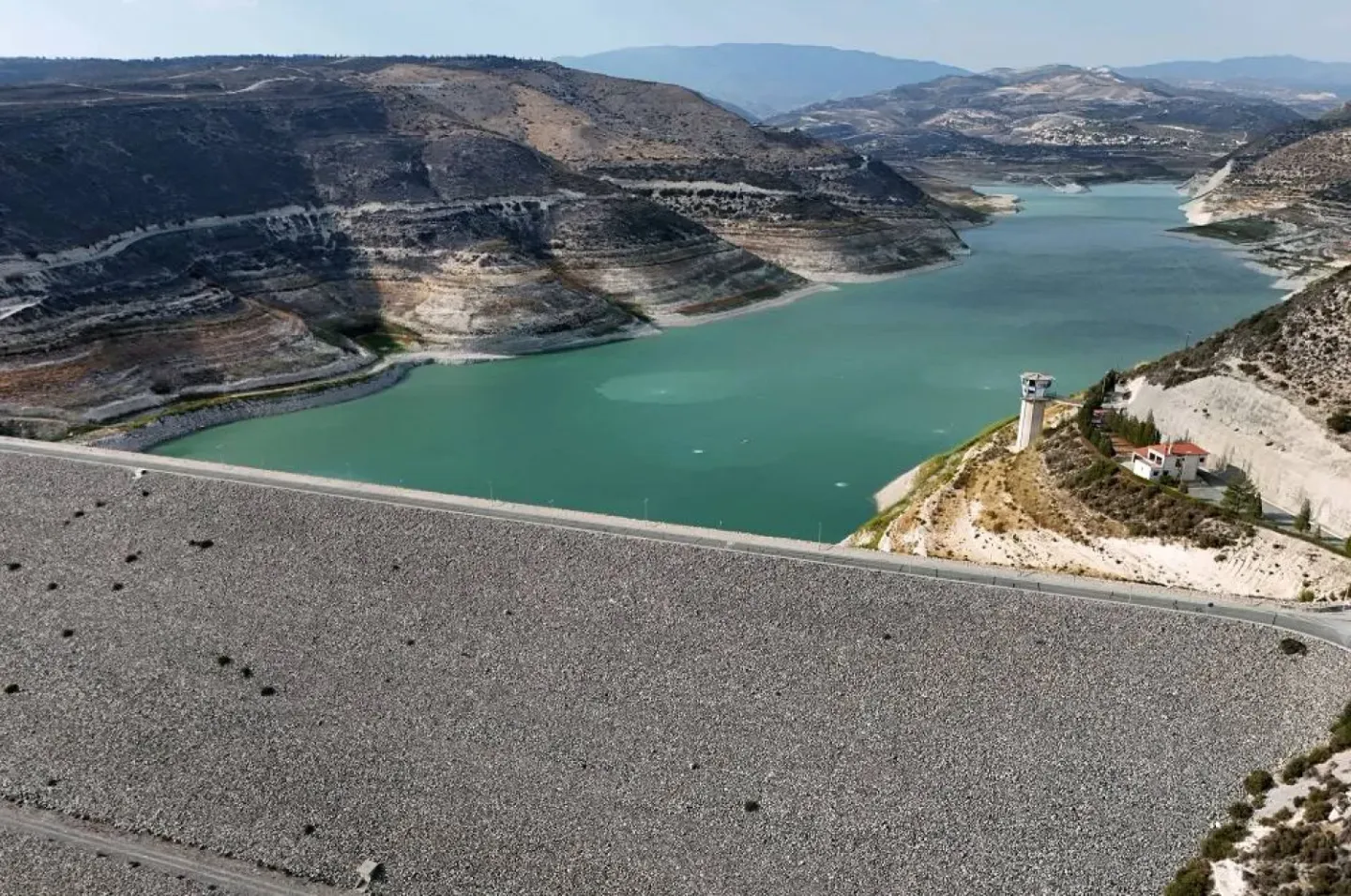
Cyprus is entering a period in which its traditional model of water supply is no longer functioning. For decades, the island relied on winter rains and dams that stored natural water for the year ahead. Today, this system can no longer withstand climatic pressure: rainfall is declining, summers are becoming longer and hotter, and in 2025 the reservoirs were filled to just 14–15% of their capacity — one of the lowest levels in recent years.
In response, the government has launched the most significant water reform of the decade: Cyprus is effectively transitioning to a water supply model based almost entirely on desalinated water.
Why Desalination Became Unavoidable
The problem has been building for years, and all sources converge on one conclusion: water scarcity has become structural.
- A shifting climate
Droughts in Cyprus are no longer episodic — they are part of a long-term trend. Winters are shorter, summers are hotter, and annual precipitation is steadily falling. - Rising consumption
With a growing population, an expanding tourism sector and water-intensive agriculture, demand has surged. The dams are no longer able to cover peak needs. - Natural supplies are no longer reliable
Relying on “a rainy winter” has become unrealistic. Weather patterns are now too variable to serve as a foundation for national water planning.
In these conditions, turning to the sea is not a choice but the only predictable, scalable solution.
The New Water Architecture of Cyprus
The government is significantly increasing desalination capacity. According to available data from confirmed sources, as of late 2025 Cyprus has:
• Operating large-scale desalination plants
They produce approximately 235,000 m³ of water per day, enough to cover essential needs during drought periods.
• Mobile desalination units supplied by the UAE
These units were provided as part of a humanitarian initiative to help Cyprus cope with severe shortages. They can be deployed quickly in regions experiencing acute demand.
• New temporary facilities under installation
Locations mentioned across the reports include:
— Episkopi (Limassol district)
— Vasiliko (Larnaca)
— Several sites in the Famagusta region
• Private-sector involvement — particularly hotels
Thirteen hotels have applied to install their own mini-desalination facilities. This demonstrates growing interest in semi-autonomous water systems that can reduce pressure on the national supply.
• A significant increase in state spending on desalinated water
Annual allocations of around €140 million are being discussed. This confirms that desalination is viewed as a long-term national strategy rather than a temporary crisis measure.
How Much Water Cyprus Plans to Produce in the Coming Years
Exact figures depend on the commissioning of new facilities, but the plan is clear:
- maintain and upgrade all existing permanent desalination plants;
- raise daily desalinated water output to a level sufficient to meet the entire domestic demand;
- redirect natural dam water primarily toward agriculture;
- strengthen regional networks through mobile units;
- gradually replace temporary installations with new permanent stations in strategic locations.
In effect, Cyprus is building a system in which household drinking water is supplied almost entirely from the sea.
Key Challenges: Cost, Energy and Environmental Impact
1. Cost
Desalination is expensive. Construction, maintenance, energy consumption and distribution significantly increase the financial burden. This explains the substantial annual budget allocations.
2. Energy dependence
Desalination is power-intensive. As capacity increases, so will pressure on the island’s energy grid. A gradual transition to renewable energy will be essential.
3. Environmental considerations
The discharge of concentrated brine must be tightly regulated to avoid damaging marine ecosystems. Proper dilution and monitoring protocols are critical.
4. The need for a systemic approach
Desalination alone cannot solve all problems if water networks continue to suffer losses, agriculture remains water-intensive, and distribution infrastructure is not upgraded.
What This New Water Strategy Means for Cyprus
The island is adopting a model used by some of the world’s driest regions: water becomes a technological product rather than a natural resource.
This shift brings several advantages:
- water supply becomes independent of weather patterns;
- reservoirs serve as reserves rather than primary sources;
- tourism is protected from supply disruptions;
- the private sector can invest in partial self-sufficiency;
- the state gains the ability to plan for the long term.
Cyprus is, in essence, rebuilding the foundation of its infrastructure for a new climatic era.
The Road Ahead: Critical Questions
The success of the transition will depend on several factors:
- Will new permanent desalination facilities be completed on time?
- Can part of the desalination load be transferred to renewable energy?
- How will agricultural practices adapt to water scarcity?
- Will environmental controls be rigorous enough?
- How effectively will mobile units support peak-demand periods?
These questions will shape the resilience of Cyprus’s future water system.
Conclusion
The picture that emerges is clear: Cyprus is preparing for a future in which water no longer arrives “from the sky” but is produced through technology.
And given the realities of climate change, this is not a drastic step — it is a pragmatic, necessary strategy that provides long-term stability.