10 things we consider normal — and you only begin to understand with time
Before writing this, we did something very simple. We asked several of our Cypriot friends — people who have lived on this island for more than fifty years — how they see the difference between expectation and reality.
People who were born here, raised families here, worked through crises here and watched Cyprus change slowly, decade after decade.
A Cypriot doesn’t analyse Cyprus.They live in it.
1. We’re not slow. We conserve energy
When people say, “Everything on Cyprus is slow,” it rarely surprises us. We’ve heard it for years.
But for us, speed has never been a virtue on its own. If something can be done without tension, we won’t manufacture urgency just to appear efficient. Growing up here means learning that dramatic gestures and rushed decisions often create more complications than solutions.
There is a rhythm to how things move. A document might take time. A response may not be immediate. Yet when something truly matters — a health issue, a family emergency, a real need — things can move remarkably quickly. The difference is simple: urgency must be real, not performative.
A pause here is not indifference. It is restraint.
2. Work is part of life, not its justification
We respect ambition. Many Cypriots work extremely hard. But work is not the measure of a person’s worth.
It is normal here to close a business for a few days in August. It is normal to leave early for a family event. It is normal not to answer emails late at night. This isn’t laziness; it’s a boundary.
The island has always been small enough for life to remain visible. If you sacrifice everything for work, everyone sees it — and quietly questions it. Success here is not only financial. It is whether you still have time for your parents, your children, your table on a Sunday.
Efficiency is useful. But life is not an efficiency project.
3. Rules exist, but people matter more than instructions
Newcomers sometimes struggle with this. The same situation might be handled differently depending on where you go or who you speak to.
There is history behind that. Cyprus has experienced political division, economic upheaval and periods where formal systems were fragile. Communities survived by relying on relationships, not paperwork alone.
So when a rule meets a real human situation, the instinct is not always to quote the regulation. It is to look at the person and ask what is fair. Sometimes that flexibility feels confusing. Other times, it feels unexpectedly humane.
The written rule matters. But so does context.
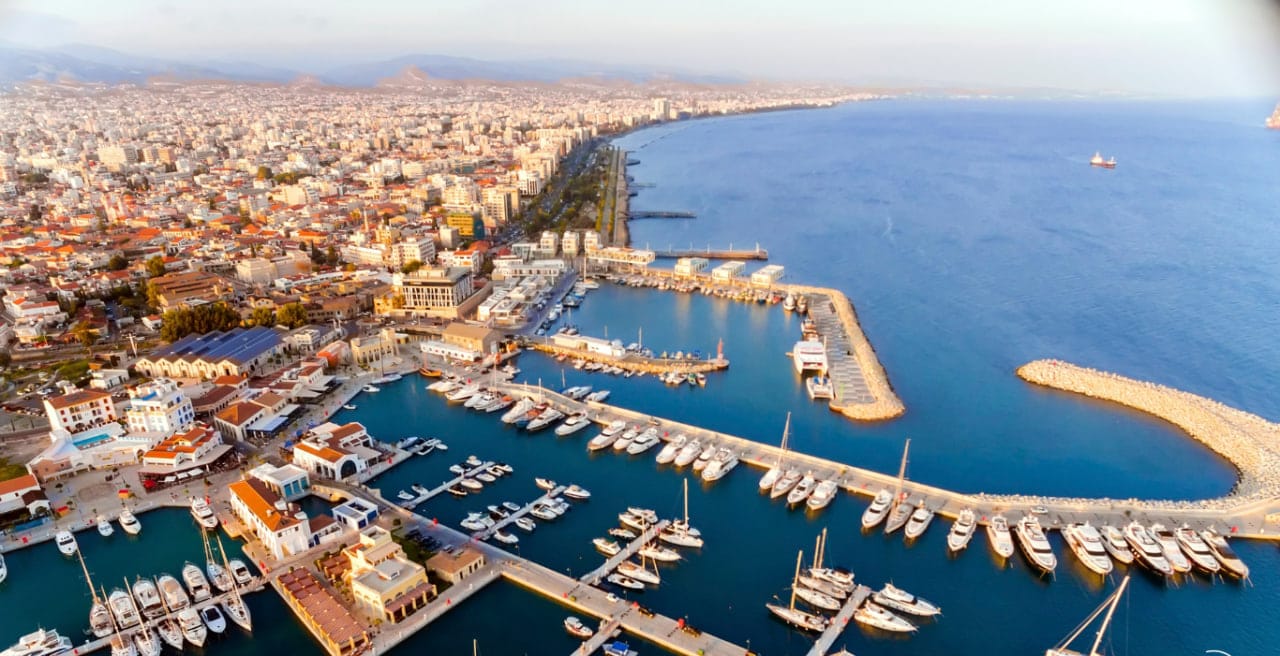
4. The sea is part of the background, not the centre of identity
Visitors are often surprised that locals don’t swim every day.
We love the sea. We grew up with it. But it is not an event for us. It is simply there — like the sky or the mountains. What shapes identity more deeply are neighbourhoods, extended families, village squares, school friendships that last decades.
The sea will still be there tomorrow. But grandparents age. Children grow up. Parents wait for you to visit. So we choose people first.
The postcard view is beautiful. But it is not the core of life.
5. We remember behaviour, not words
Cyprus has a long memory. Not in a dramatic way — in a social way.
People may not discuss things openly, but they observe. How you speak to someone. Whether you respect a cleaner the same way you respect a director. Whether you keep your word.
You can be highly educated and professionally impressive, yet still leave a quiet negative impression if your tone is wrong. Equally, someone modest and calm can build trust that lasts for decades.
Reputation here travels softly. And it travels far.
6. We dislike pressure because it breaks trust
When someone insists, demands, or compares us to “how it’s done elsewhere,” something shifts.
It is not about pride. It is about respect. Pressure suggests that the other person sees the interaction as transactional rather than relational.
When someone explains calmly, gives space, and approaches the situation with patience, the response is often generous. People will go out of their way to help. They will make calls. They will find solutions that aren’t written anywhere.
Trust here grows through tone and consistency, not volume.
7. We’re not closed. We just don’t rush closeness
Cyprus is built on long-standing relationships. Families often live near one another. School friendships last a lifetime. Neighbours know each other for decades.
Because of that, closeness is not casual. It is layered. We observe how someone behaves over time — not in a single meeting.
An invitation into a Cypriot home is meaningful. It is not networking. It is not politeness. It signals that you are being seen as more than a visitor.
Belonging here is gradual. And once granted, it is steady.
8. We avoid conflict because of experience, not fear
The island’s history is not abstract to us. It is personal and present in family stories.
So when disagreements arise, the instinct is often to lower the temperature rather than raise it. Not because we lack conviction, but because we understand how easily small conflicts escalate into long consequences.
From the outside, this restraint can look like avoidance. In reality, it is calculation. We choose stability over spectacle.
Quiet resolution is often stronger than loud victory.
9. We’re used to living with uncertainty
Cypriots grow up understanding that circumstances can change. Economies fluctuate. Political realities shift. External pressures arrive without warning.
This creates a certain psychological flexibility. We do not place absolute faith in perfect systems. We assume that adaptation will be required at some point.
Resilience becomes more valuable than optimisation. Community becomes more reliable than long-term forecasts.
We plan, but we do not worship plans.
10. We don’t want Cyprus to seem perfect
When people romanticise the island, it makes many of us slightly uneasy.
We know the inconveniences. The slow procedures. The frustrations. The contradictions. We live with them daily.
This is not paradise. It is home.
A home that can be inefficient, occasionally stubborn, sometimes frustrating — but one where identity is not measured solely by productivity, and where life is allowed to unfold at a human pace.
If you accept the imperfections, you begin to understand why so many of us stay.
We don’t want Cyprus to seem perfect
Cyprus was never designed to impress. It was shaped to endure.
Life here is not accelerated. It is stretched, so that you can feel it rather than race through it.
And once you understand that, you are no longer simply observing the island. You are living within its rhythm.