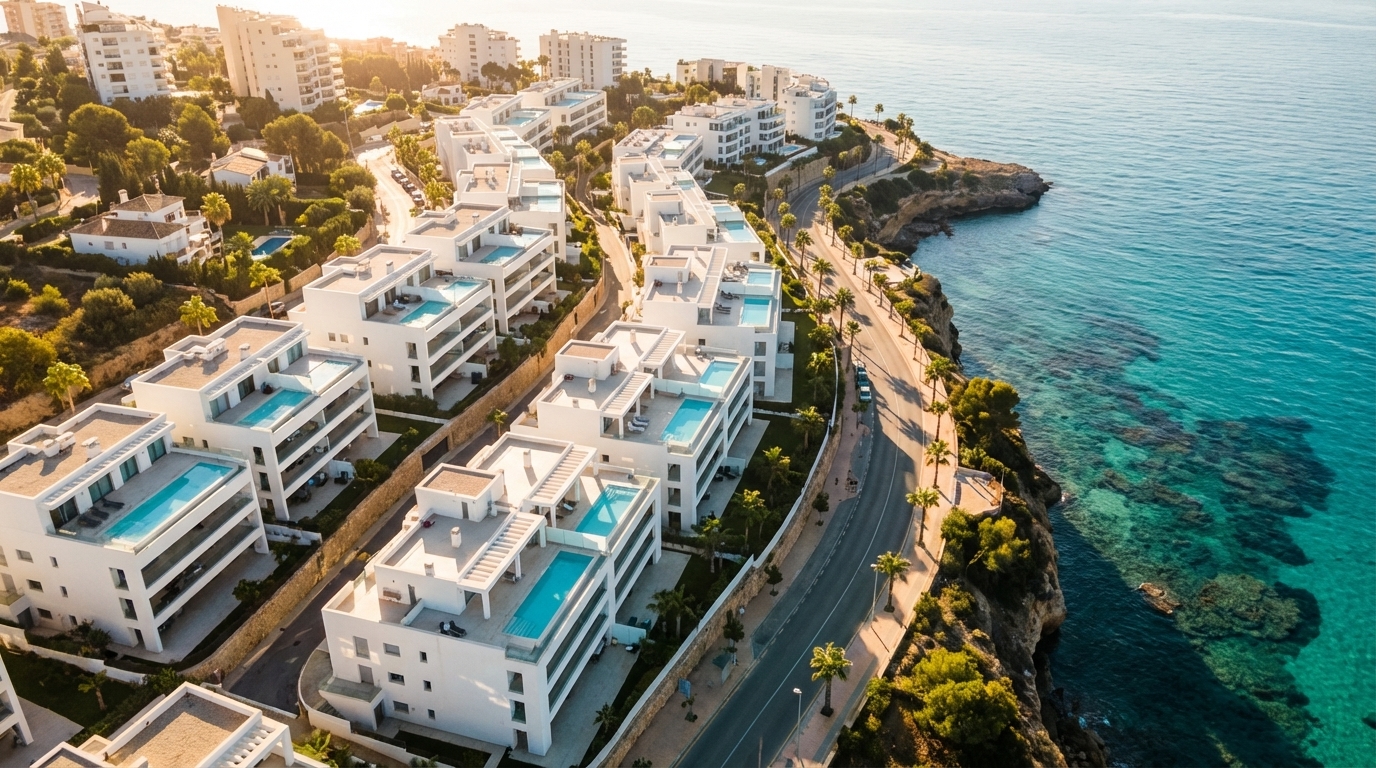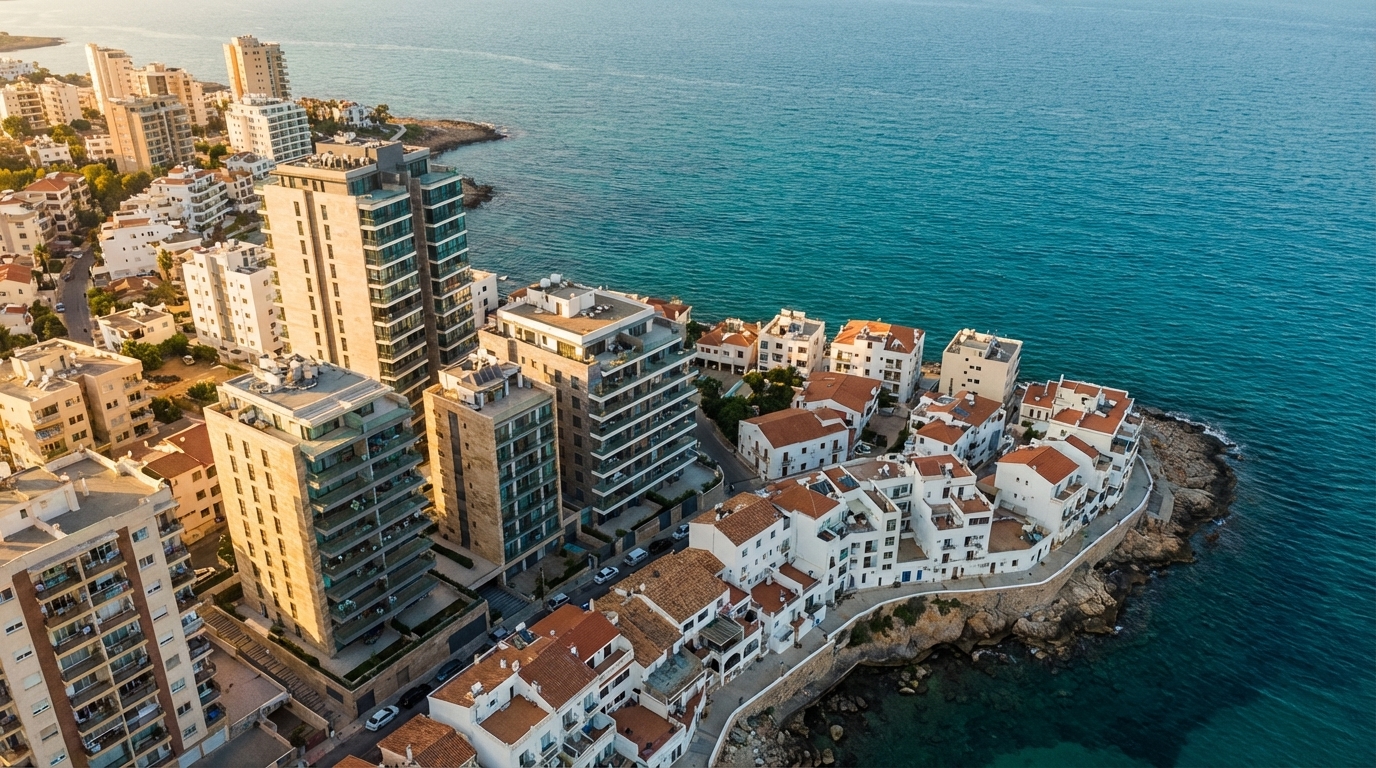
The mid-2025 deceleration in Cyprus property prices turned out to be a pause, not a pivot. The Central Bank of Cyprus has released Q4 2025 Residential Property Price Index data showing overall prices up 7.1% year-on-year — nearly double the 5.0% recorded in Q3. Apartments led the charge at 9.6% annual growth. Transaction volumes surged 18.7%. And foreign buyers now account for nearly half of all property sales. These numbers paint a picture of a market that has re-entered acceleration mode with structural drivers that are unlikely to reverse soon.
The Numbers: A Quarter of Acceleration
The Q4 2025 data from the Central Bank of Cyprus tells a clear story of re-acceleration across multiple metrics. The overall Residential Property Price Index rose 2.3% quarter-on-quarter, nearly doubling the 1.2% quarterly gain recorded in Q3. On an annual basis, the 7.1% increase marks a sharp uptick from 5.0% in Q3 and represents the fastest pace of growth since early 2023.
The apartment segment is driving the acceleration. Apartment prices rose 9.6% year-on-year, significantly outpacing houses at 3.4%. This divergence reflects the composition of demand — foreign investors overwhelmingly favor apartments as investment-grade assets, particularly in coastal districts with established rental infrastructure.
Regional Divergence: The West Coast Leads
The regional picture reveals where capital is actually flowing. Paphos apartments recorded the highest annual growth at 13.6%, followed by Larnaca at 12.2% and Limassol at 9.3%. For houses, Limassol led at 9.9% followed by Larnaca at 8.3%. Nicosia showed relatively modest growth at 1.0% for houses, while Famagusta apartments actually declined 4.1%.
This divergence is significant. Capital is not lifting the entire market evenly — it is concentrating in specific coastal corridors. Paphos's apartment price leadership validates the geographic rebalancing thesis that has been developing since Landbank Analytics data showed Paphos overtaking Limassol in average sale prices for the first time. The investment market is rotating westward.
- Paphos apartments: +13.6% YoY (leading growth)
- Larnaca apartments: +12.2% YoY
- Limassol apartments: +9.3% YoY
- Limassol houses: +9.9% YoY
- Larnaca houses: +8.3% YoY
- Paphos houses: +7.6% YoY
- Nicosia houses: +1.0% YoY
- Famagusta apartments: -4.1% YoY
The Foreign Buyer Factor: Approaching Half the Market
Concurrent data from the Department of Lands and Surveys reveals a structural shift in market composition. Non-EU buyers accounted for 30.8% of all property sale contracts in January 2026. Combined with EU buyers at 14.6%, foreign purchasers represented 45.4% of all transactions — approaching parity with domestic buyers at 54.6%.
This near-parity represents a tipping point with significant policy implications. When foreign capital sets the marginal price for nearly half of all transactions, local income fundamentals cease to be the primary price determinant. This is the same dynamic that drove regulatory interventions in Lisbon, Barcelona, and Amsterdam — markets where foreign investor activity compressed affordability until political pressure forced restrictions.
In Q4 2025, foreign buyer transactions grew 23.9% year-on-year versus 15.3% for domestic buyers. The gap is widening, not narrowing. This data arrives amid active parliamentary debate on restricting third-country property purchases, providing concrete evidence for the restriction advocates.
Supply Response: Too Little, Too Late?
Building permits rose 13.9% in January-November 2025 compared to the same period in 2024, according to CYSTAT data. The government has also announced a housing strategy targeting 2,500 new homes over two years, including 400 affordable units and 500 affordable rental units on state land (completion by 2029). KOAG plans to deliver 244 affordable homes for sale and 192 affordable rental units by end of 2026.
However, the market is absorbing over 1,500 transactions per month. The government's entire two-year supply target represents less than two months of market demand. The 46 applications using building coefficient incentives and 24 applications for additional coefficients (generating 12.5 million euros for the Affordable Housing Fund) suggest the incentive framework is gaining some traction, but the scale remains inadequate relative to the pace of price acceleration.
European Context: Cyprus Outperforms
Eurostat data places Cyprus's price performance in a European context. While the EU average HPI growth has been moderate, Cyprus at 7.1% significantly outperforms most peer economies. Spain's market recorded strong volume growth but price growth has been more measured at the national level. The European RE investment market is recovering — Savills projects 52 billion euros in Q1 2026 investment volumes across Europe, up 6% year-on-year — creating a positive backdrop for continued capital flows into Mediterranean property markets.
What Comes Next
The re-acceleration in Q4 2025 raises the probability that Cyprus property prices will breach pre-2008 levels in real terms within the next 12 months. For investors, the apartment segment in the west and east coast corridors offers the strongest near-term returns. For local buyers, the affordability window continues to narrow.
The key variables to watch: whether parliament advances foreign buyer restrictions (which could reduce volumes 15-25% in affected districts), whether ECB rate policy evolves to support or constrain mortgage lending, and whether the Build-to-Rent model gains enough traction to redirect some housing supply from short-term tourist use to long-term residential rental. The emergence of BTR in Cyprus — with PropTech firms offering guaranteed 4-year leases to developers — represents perhaps the most promising structural response to the affordability challenge.
For now, the data is unambiguous: Cyprus property prices are accelerating, foreign demand is the primary driver, and the supply response remains structurally inadequate. The question is no longer whether intervention will come, but when — and how disruptive it will be.
Data sources: Central Bank of Cyprus — Residential Property Price Index Q4 2025, Department of Lands and Surveys — Property Sales Contracts January-February 2026, CYSTAT — Building Permits January-November 2025, Savills — European Investment Nowcast Q1 2026, Eurostat — House Price Index