Cyprus is usually measured in sunshine hours, property transactions, and tourist arrivals.But there is another metric — architecture. And it tells a far more interesting story.
Over the past decade, the island has produced projects shortlisted and recognised in European architectural awards. These are not decorative landmarks. They are signals — of economic maturity, institutional confidence, and cultural ambition.
We have added all of them to our interactive map Cyprus: Cultural & Architectural Landmarks. Below is a closer look at each project — not as a brochure description, but as part of a larger urban narrative.
White Walls — Jean Nouvel Tower 25, Nicosia
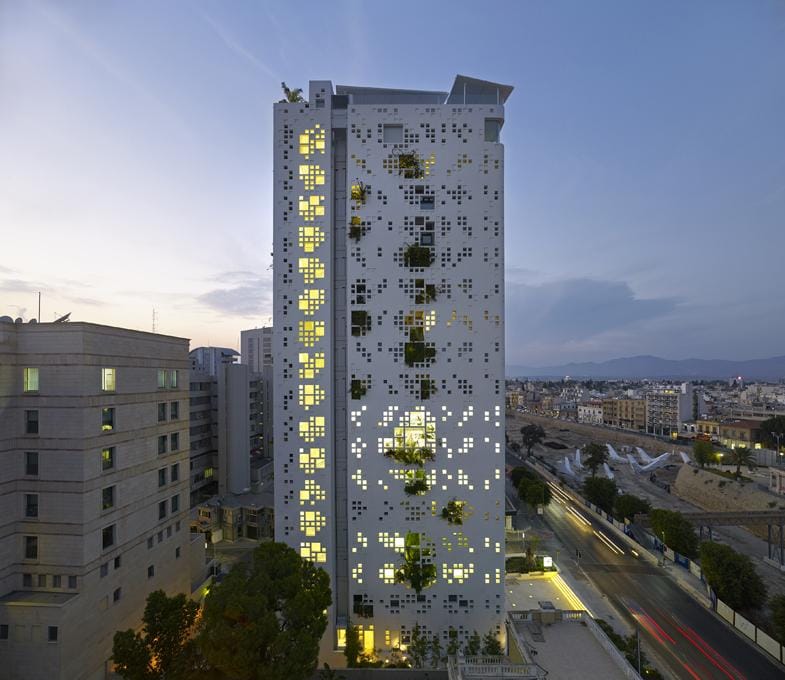
Architect: Jean Nouvel Studio: Ateliers Jean Nouvel Award: EU Mies Award 2015 (Nominee) Location: next to Eleftheria Square
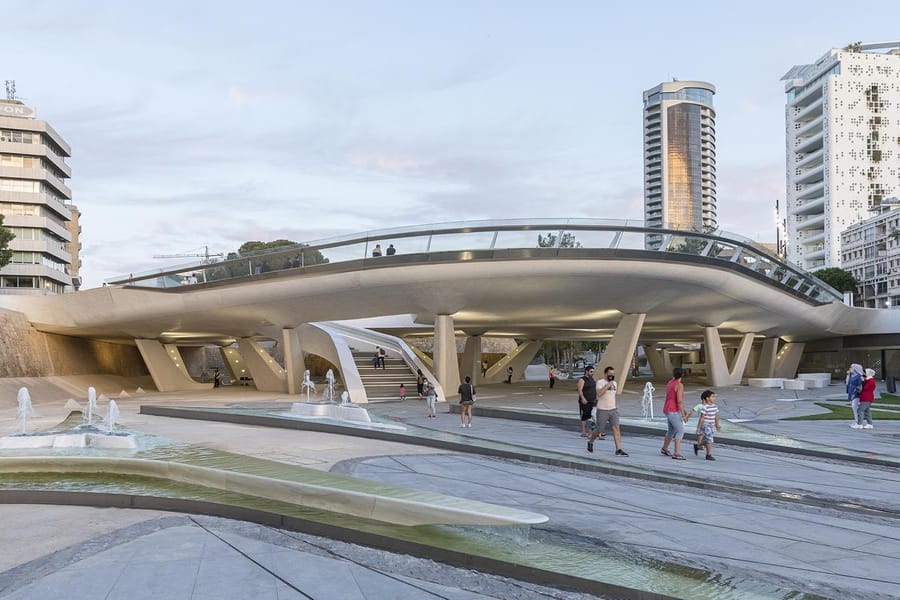
Tower 25 was the first building in Cyprus designed by a Pritzker Prize laureate. That alone placed Nicosia on the European architectural map.
The project was nominated for the European Union Prize for Contemporary Architecture — Mies van der Rohe Award (EUmies Awards) in 2015, one of the most prestigious architecture awards in Europe. Being shortlisted is not symbolic; it means the project stood out among hundreds across the EU.
Programmatically, the building combines residential units (10 floors), office space (6 floors), retail (2 floors), and three basement levels of parking. But the real impact lies in the façade — horizontal white planes that create depth, shadow, and a floating effect under Mediterranean light.
Nicosia had long remained a predominantly horizontal city. Tower 25 introduced vertical clarity. It reshaped the skyline without shouting.
Nicosia Municipality Town Hall
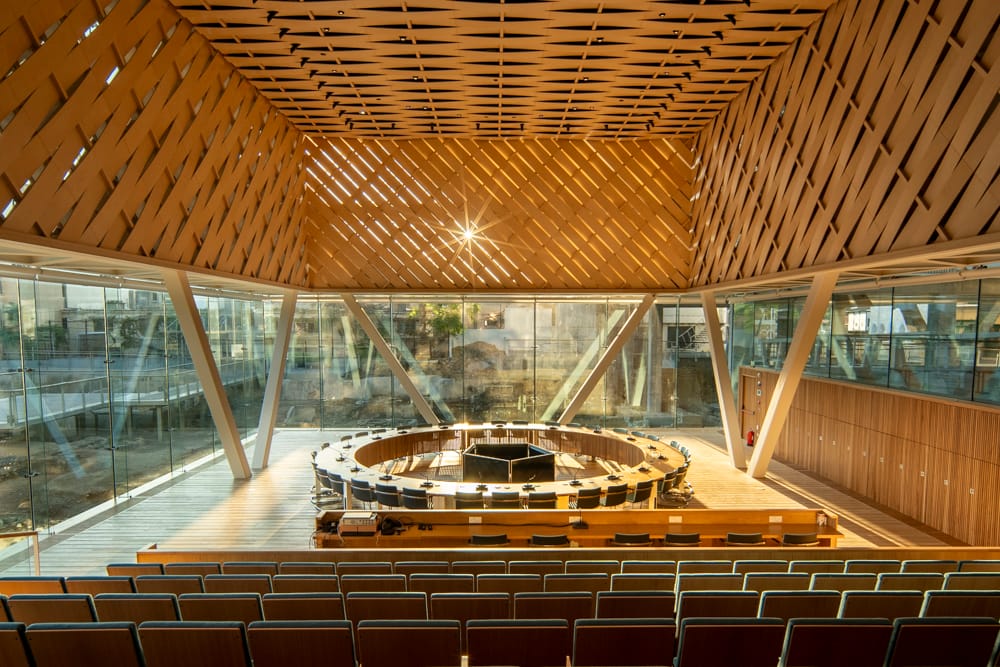
Studio: Irwin Kritioti Architecture
Widely published on international architectural platforms and referenced in European architectural discourse for its integration within a historic archaeological context.
Situated inside the Venetian walls of the old city, the new Town Hall stands in one of the most politically and historically sensitive areas of Cyprus.
The design acts as a transparent civic interface. Glass façades are not aesthetic decoration — they represent institutional openness. At night, the building glows softly, often described as a “magic lantern” within the historic fabric.
The project has been widely published in European architectural media and has been referenced as an example of contemporary civic architecture integrated within archaeological context.
In a divided capital, architecture here becomes diplomacy in built form.
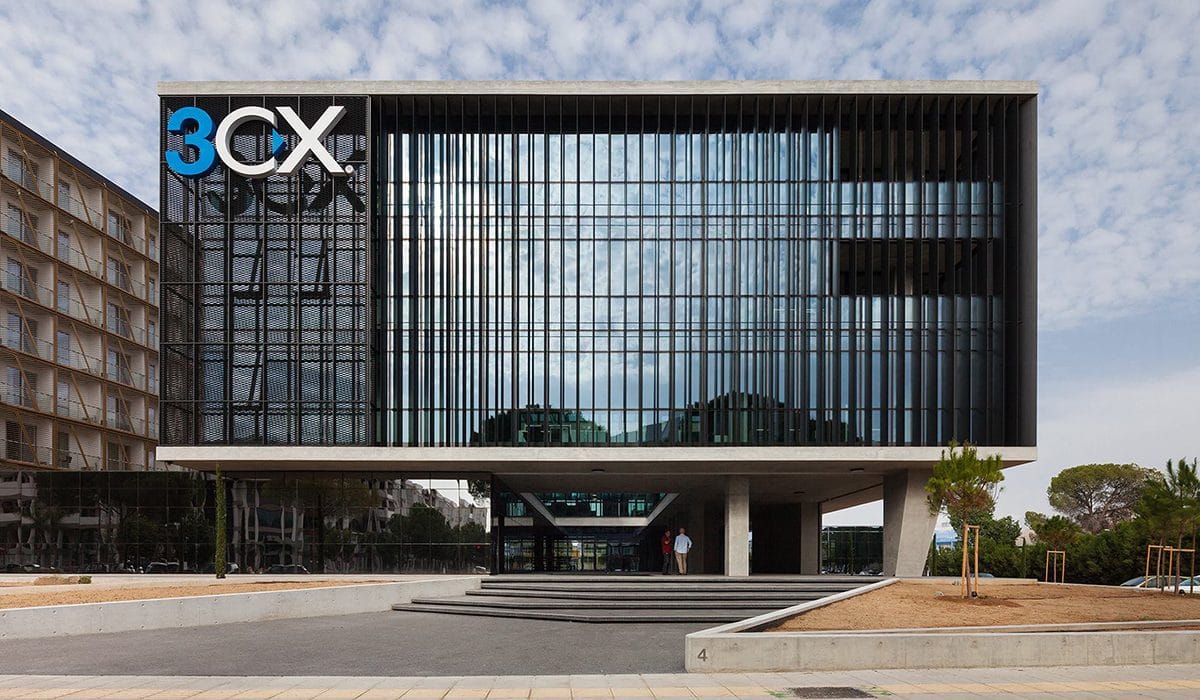
3CX Office Building, Nicosia
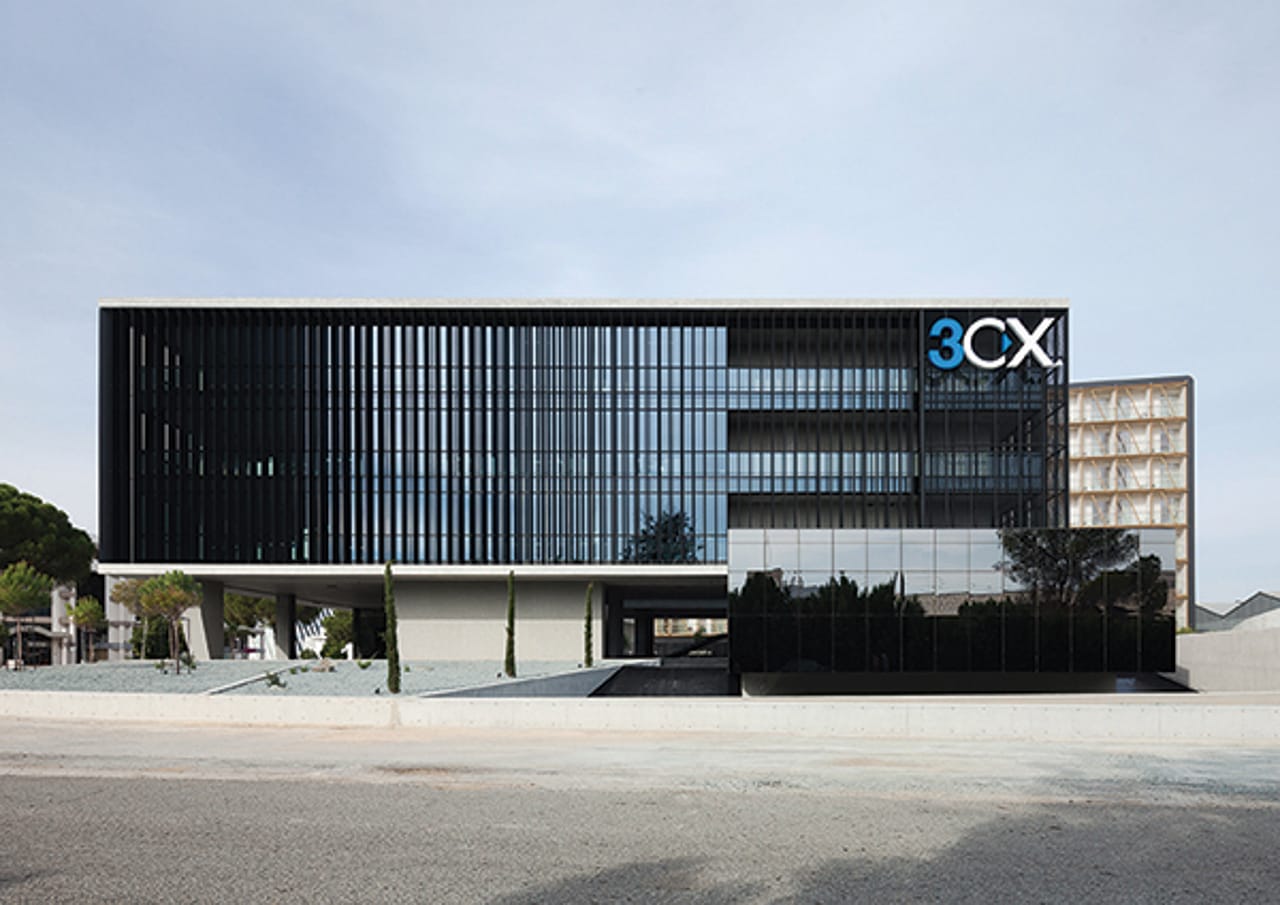
Studio: Seroff & Papadopoulos Architects Client: 3CX
The headquarters of 3CX reflects a different Cyprus — technological, export-driven, and globally connected.
The project has received national architectural recognition and was widely featured in professional publications for its integration of social infrastructure into a corporate environment.
The building is raised above ground level. Below it are shared spaces: auditorium, cafeteria, gymnasium, lounge areas, and even a swimming pool. Parking is concealed underground.
This is not just an office. It is spatial strategy for talent retention. Architecture becomes part of corporate identity and competitive positioning.
University of Nicosia — Six Towers
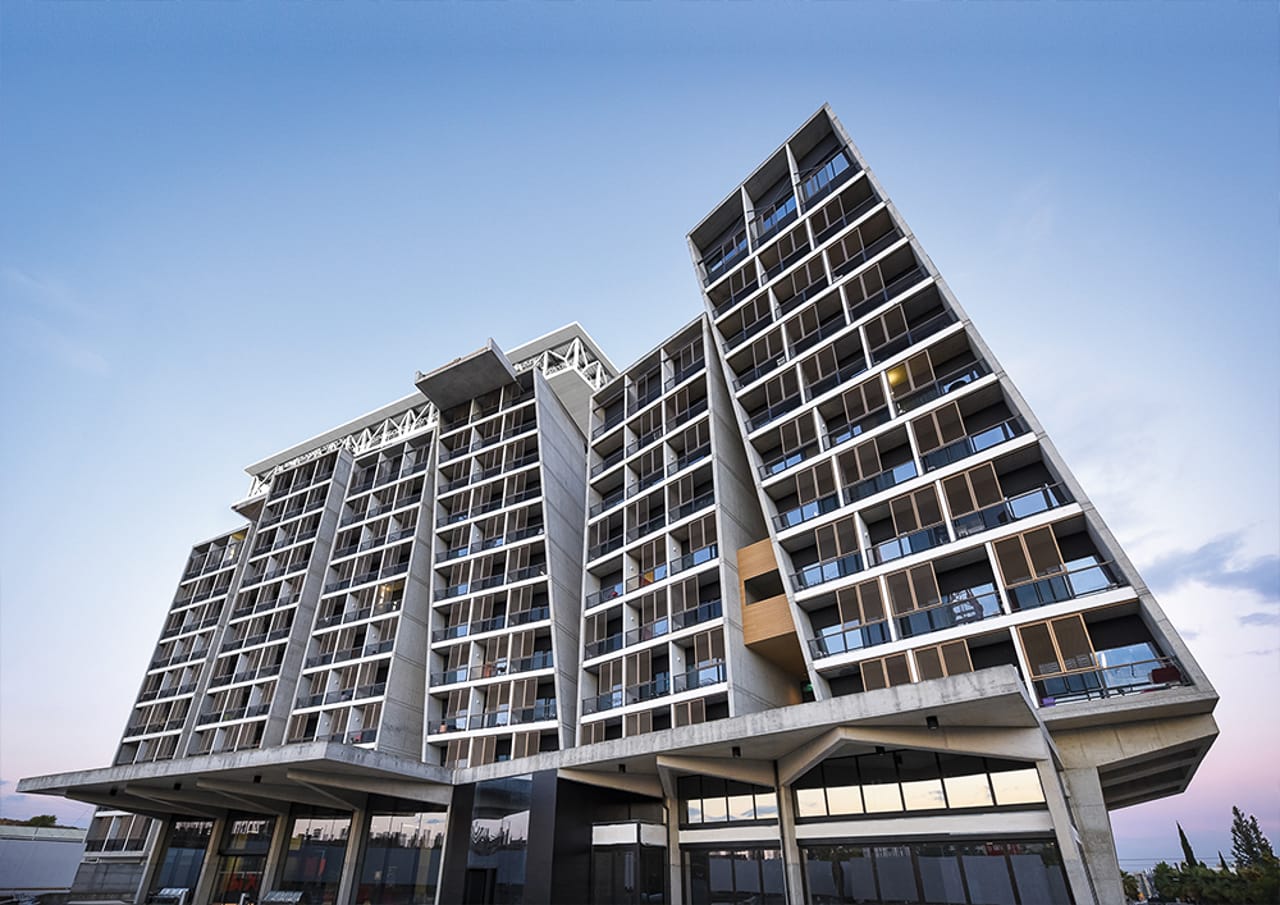
Studio: Eraclis Papachristou - Architects Featured in international architectural reviews
Six Towers is contemporary brutalism without apology.
Six vertical elements rise from an elevated slab that houses public facilities beneath. The project became a defining visual marker for the University of Nicosia and was highlighted in European architectural publications as a bold example of student housing design.
In a city dominated for decades by generic low-rise development, this complex introduced confidence.
It does not try to blend in. It asserts presence.
Vlassides Winery, Limassol Region
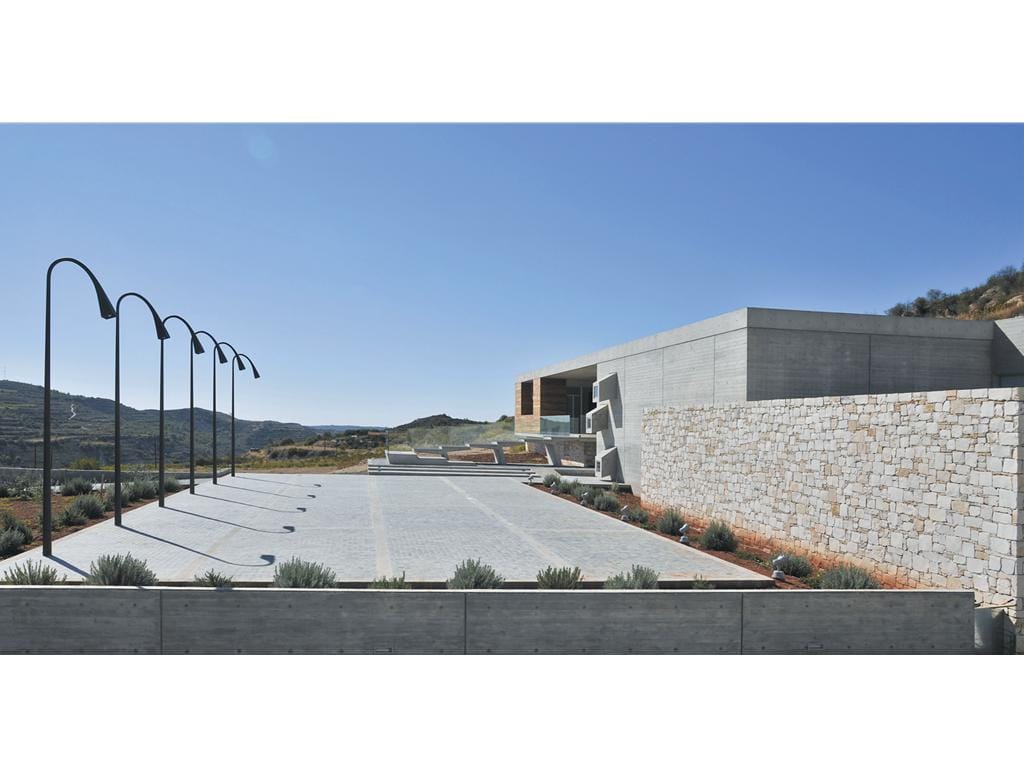
Studio: Eraclis Papachristou - Architects Location: near Koilani Recipient of national architectural awards
Vlassides Winery demonstrates how industrial architecture can become landscape architecture.
Much of the 900 m² internal area is embedded within the hillside. Parallel walls follow the slope contours, allowing the building to emerge gradually rather than dominate the terrain.
Visitors experience panoramic vineyard views alongside wine production and storage spaces, creating a spatial narrative of the winemaking process itself.
The project received national architectural recognition for its contextual integration and sensitivity to landscape.
This is architecture that collaborates with topography rather than competing with it.
Apostle Peter and St. Helen the Martyr Chapel
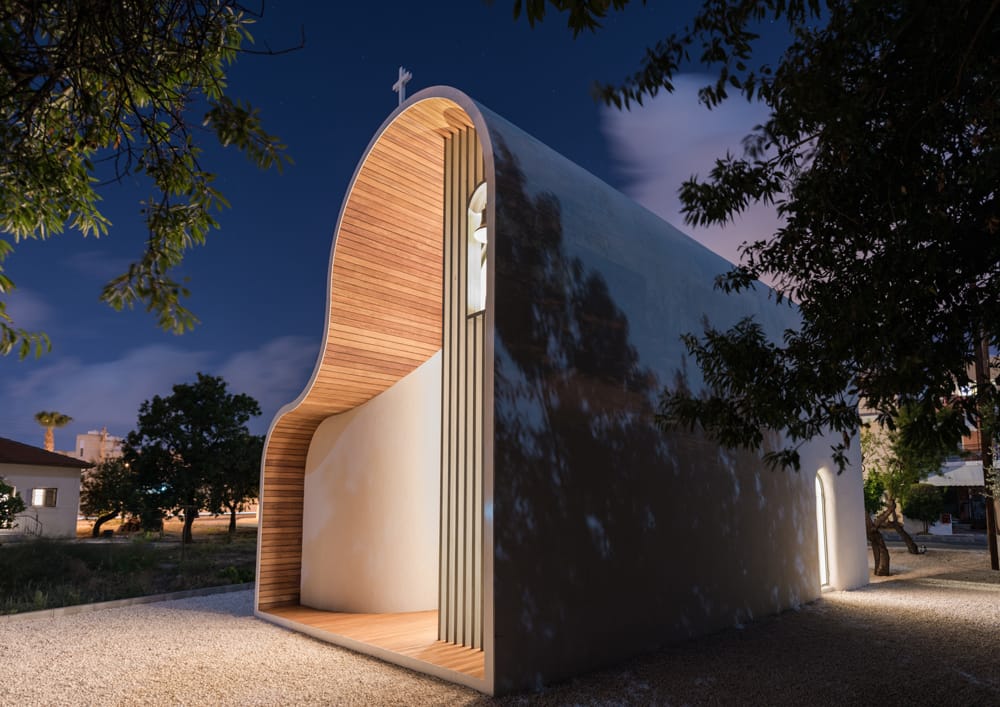
Architect: Michail Georgiou Published on international architectural platforms
Designed during the Cypriot financial crisis and built on a limited budget, this private Greek Orthodox chapel was donated to the Church of Cyprus.
The project experimented with digital modelling and material research to challenge a morphologically constrained typology — the traditional Orthodox church form.
Despite its small scale, it has been featured internationally as an example of how contemporary design can reinterpret sacred architecture while maintaining spiritual clarity.
Small footprint. Large conceptual ambition.
New Limassol Port Passenger Terminal
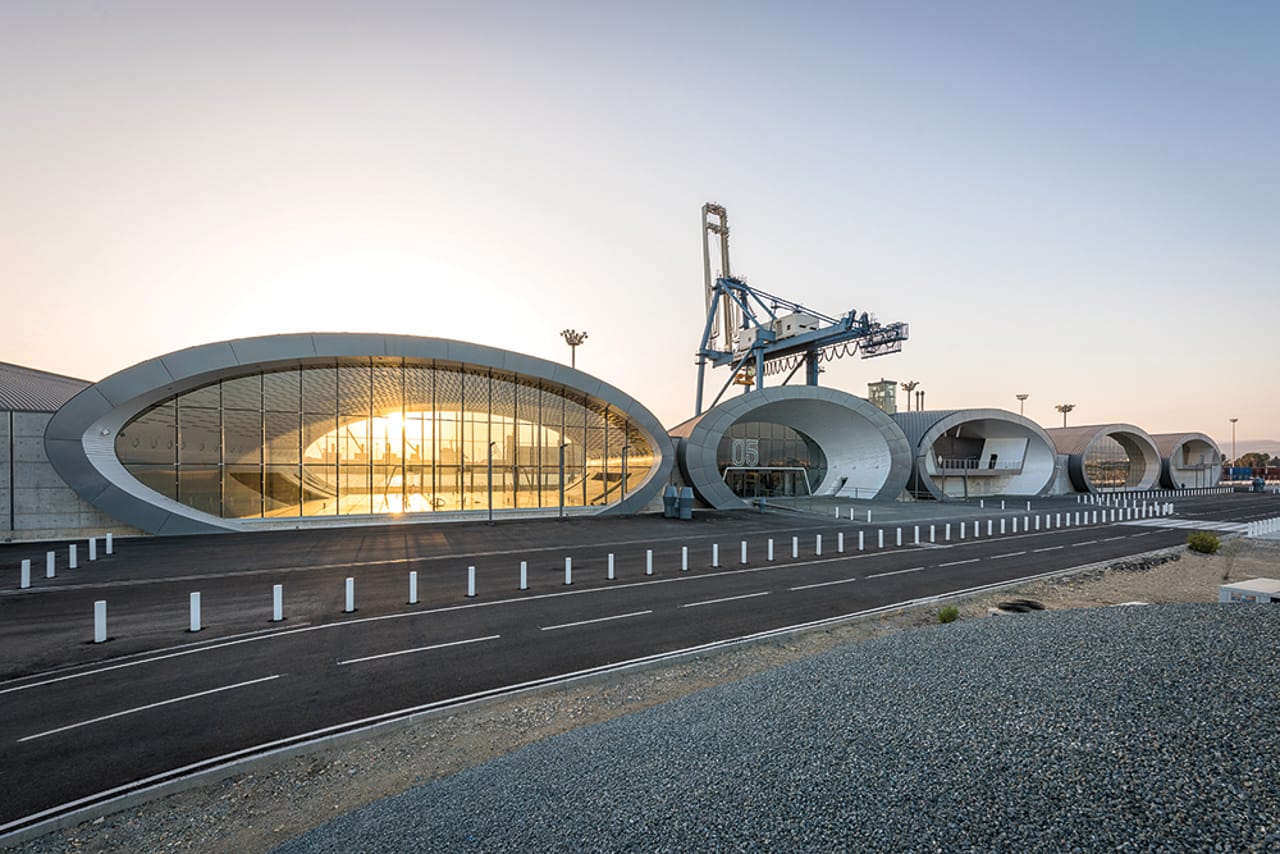
Studio: Irwin Kritioti Architecture Internationally recognised infrastructure project
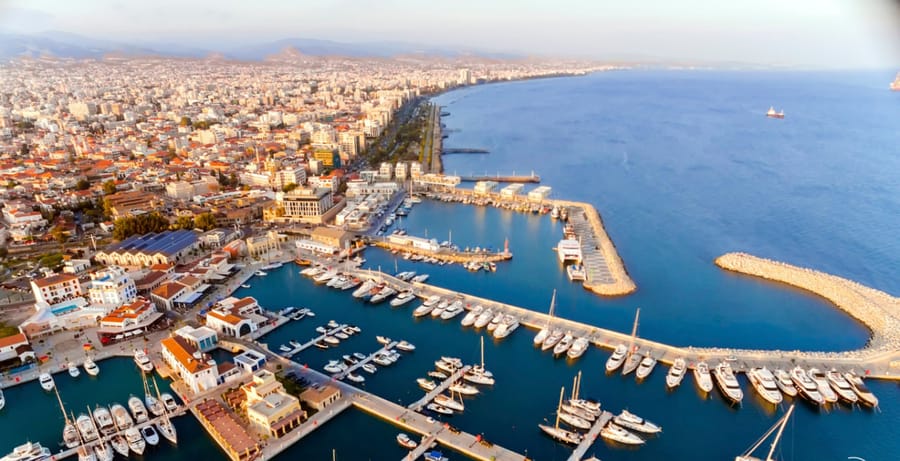
The new passenger terminal repositions Limassol’s port as more than fenced infrastructure.
Designed as a flexible gateway to the island, the building functions beyond the limited cruise calendar. It acts as a catalyst for reconnecting the harbour area with the city.
Infrastructure here becomes urban strategy.
Why This Matters
These projects collectively show a structural shift.
Cyprus is no longer only a tourism economy or a real estate market. It is investing in spatial quality — in civic buildings, universities, tech headquarters, cultural infrastructure.
Architecture is often the earliest visible sign of economic transformation. Concrete moves faster than statistics.
All these projects are now mapped on our interactive map Cyprus: Cultural & Architectural Landmarks.
If you want to understand where the island is heading, start by looking at what it builds.